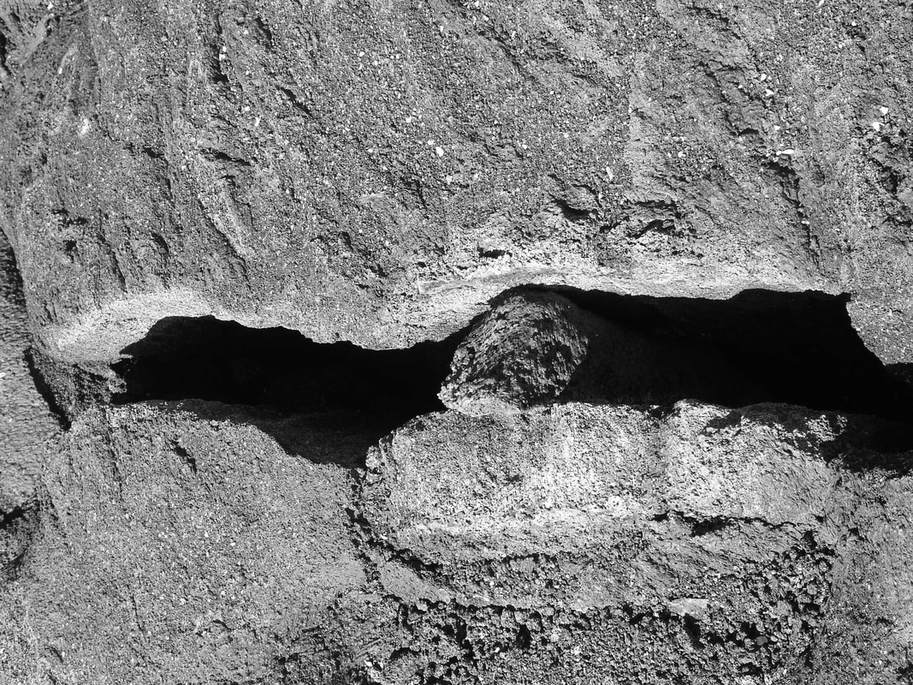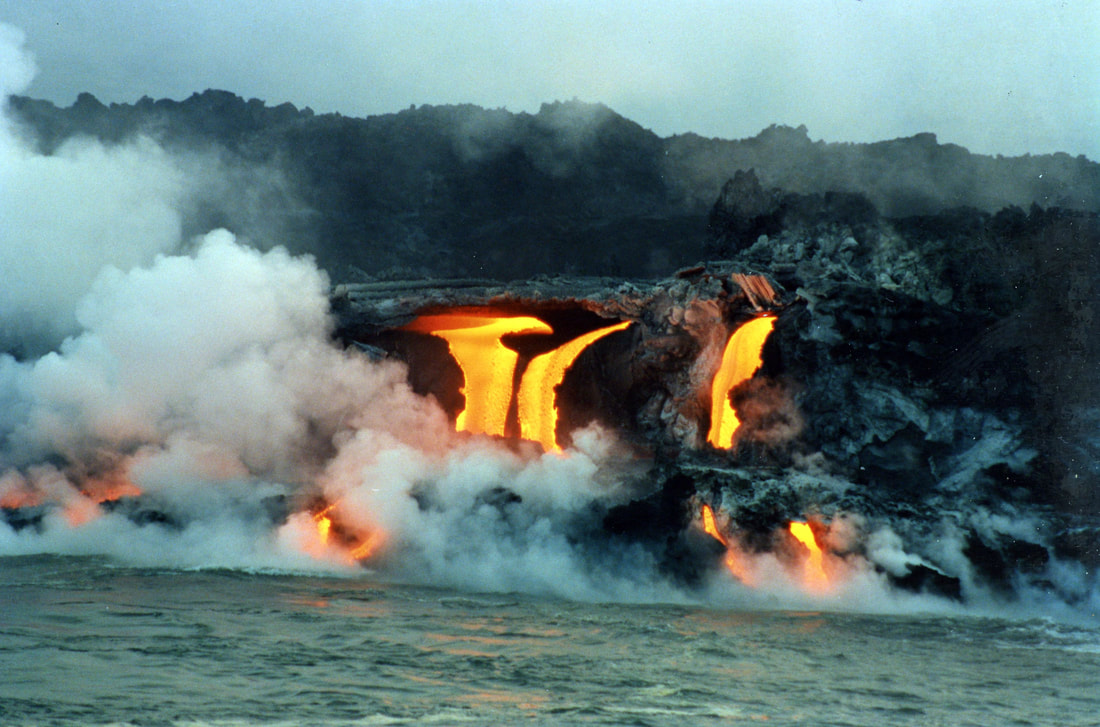
Make no mistake about it, the Galápagos are volcanic islands. Oceanic volcanic islands, erupting from a "Hotspot", an area of weakness located deep beneath the Earth. The result, a volcanic island chain, called an archipelago - the same exact origin as the Hawaiian Islands. Sometimes we have the fortune of seeing an eruption take place. An even more fortunate occurrence is when that eruption lasts for a period
of weeks, such as in 1995 on the island of Fernandina.
of weeks, such as in 1995 on the island of Fernandina.
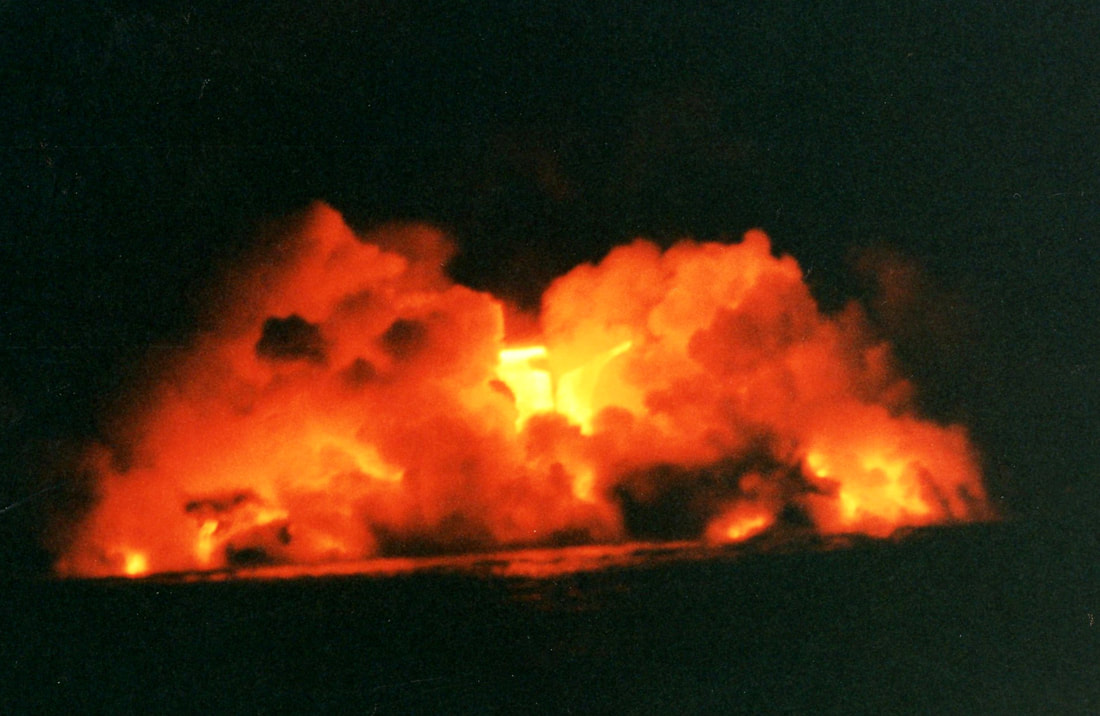
We sat up all night, transfixed, watching and photographing. And who knew what exposure to use at night, no tripods on a rocking vessel, no digital to fall back on for quick feedback - this was still the film era.
You'll have to imagine the popping, cracking sounds and the sulfur smell in the air; this was the year
before I bought my first video camera.
You'll have to imagine the popping, cracking sounds and the sulfur smell in the air; this was the year
before I bought my first video camera.
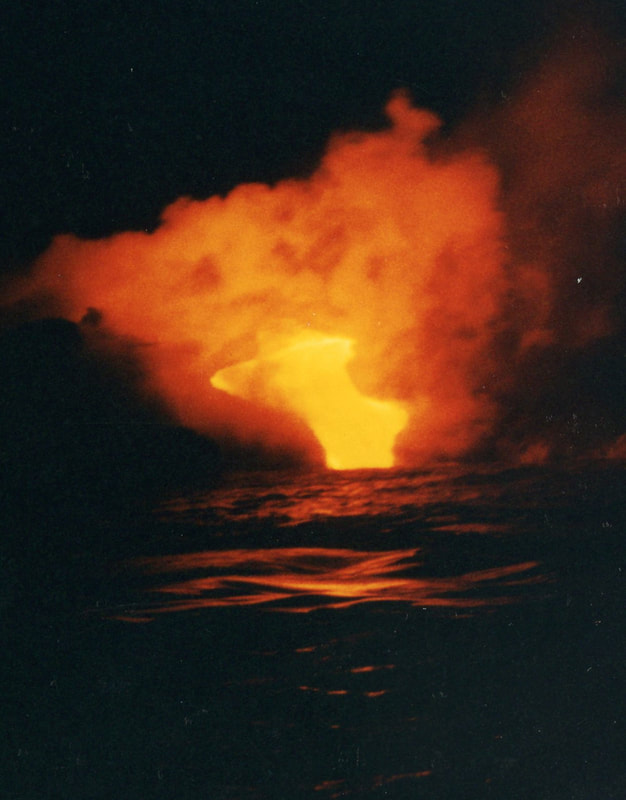
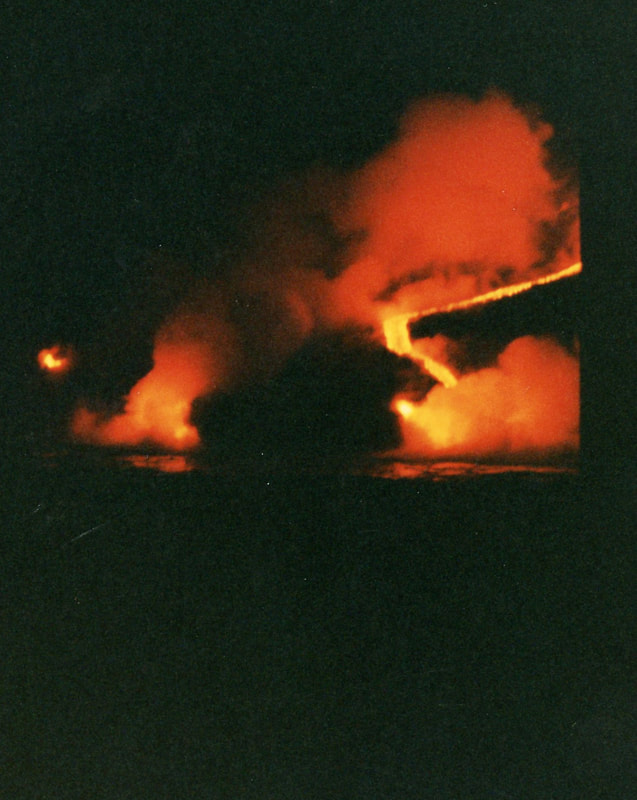
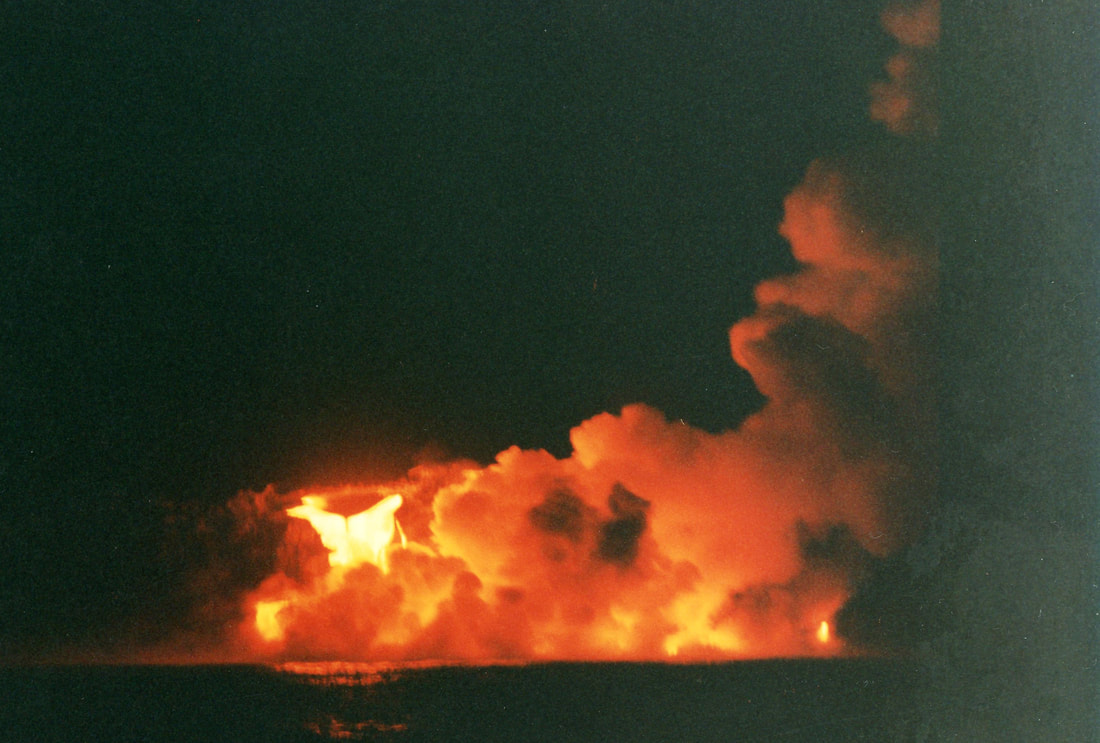
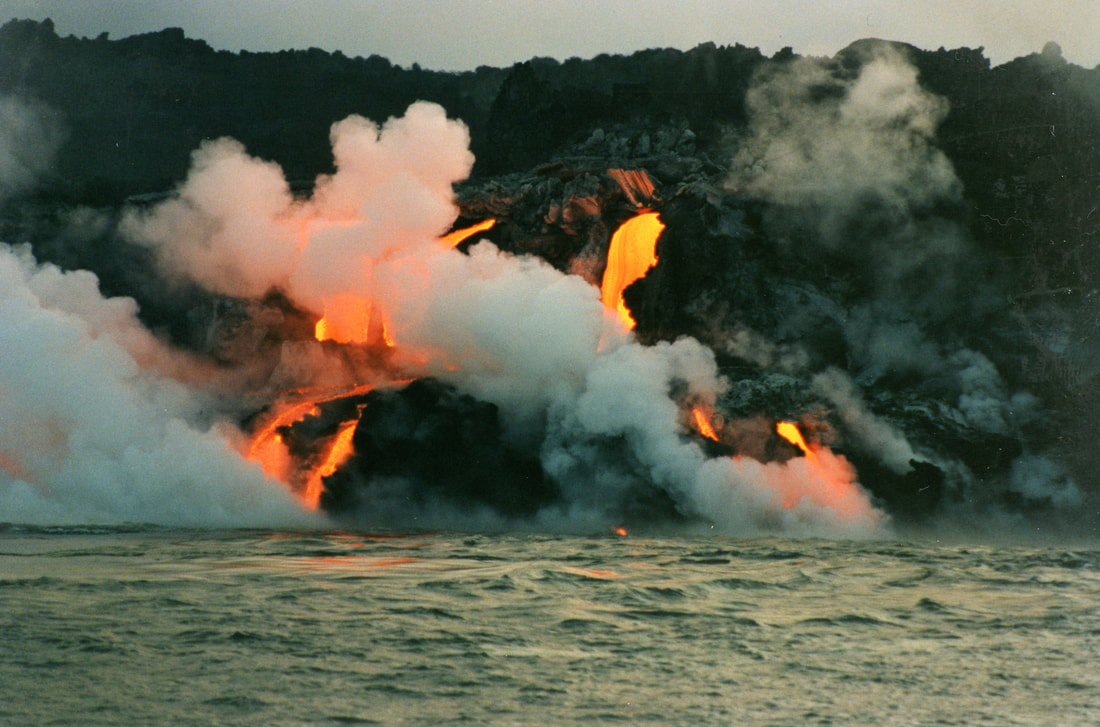
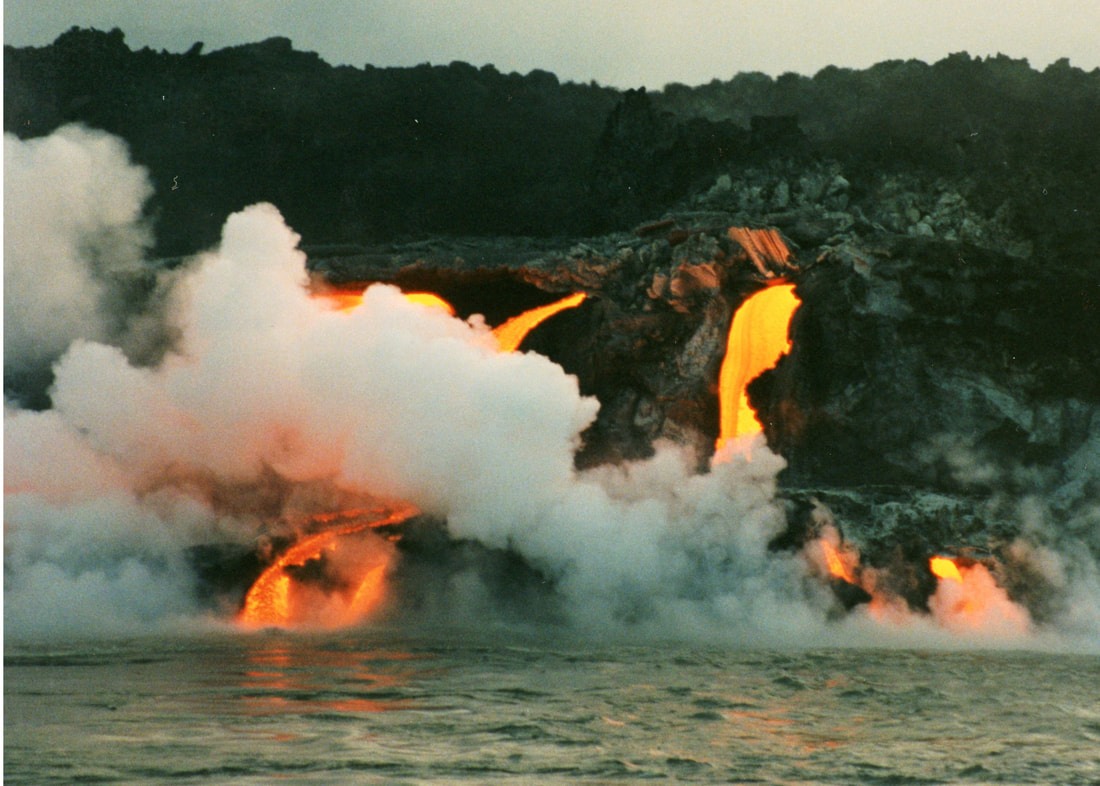
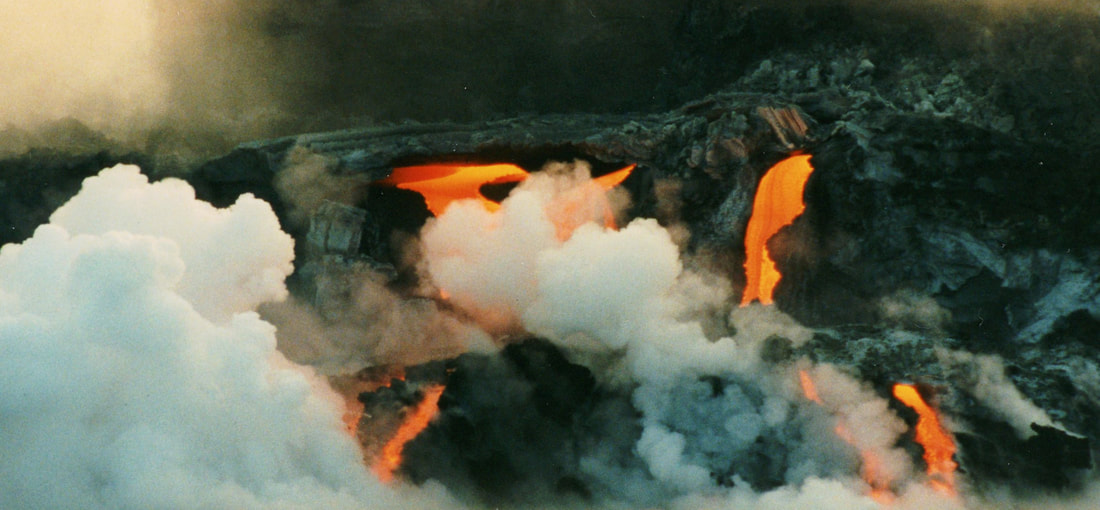
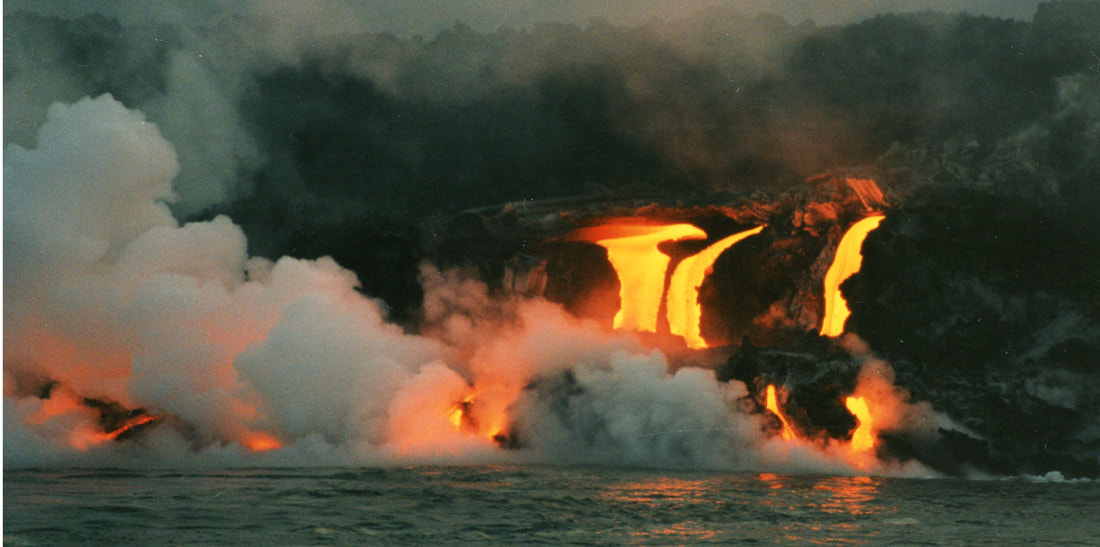
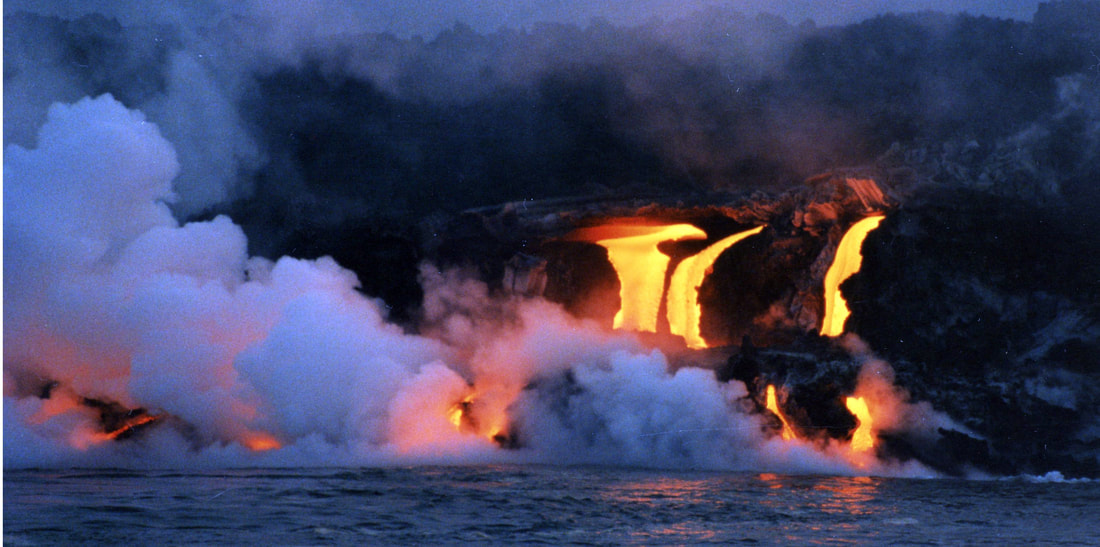
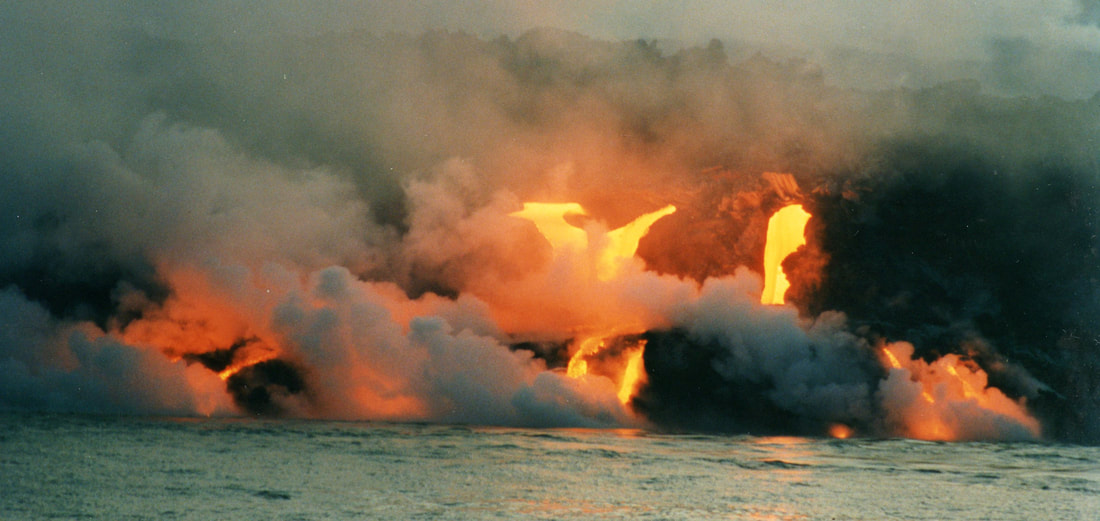
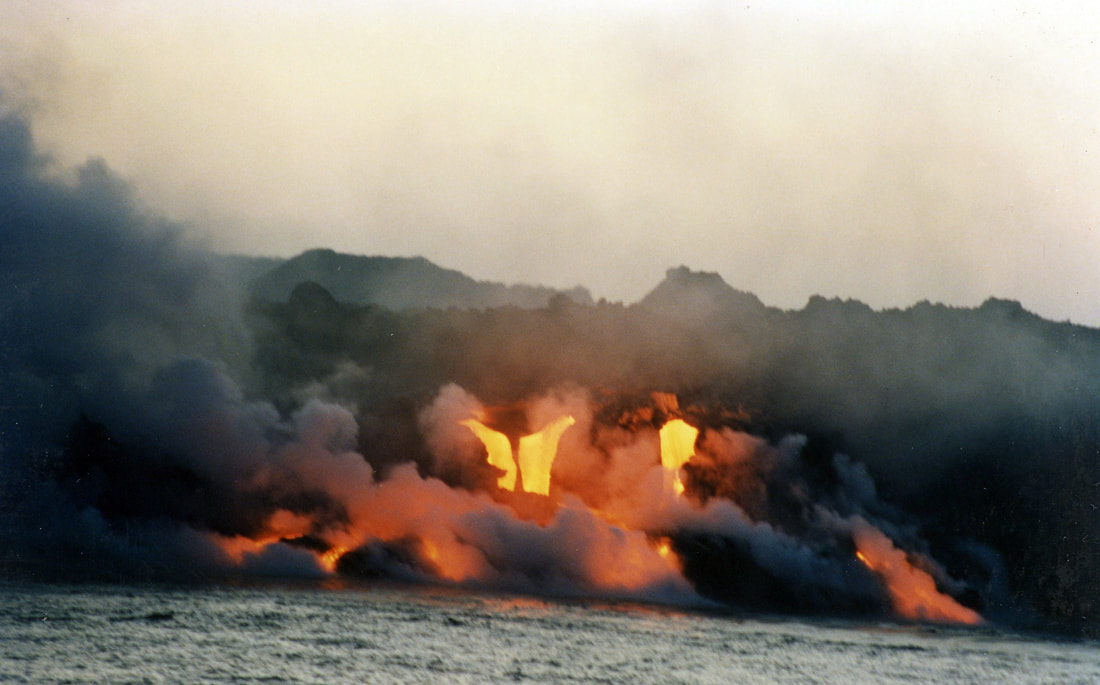
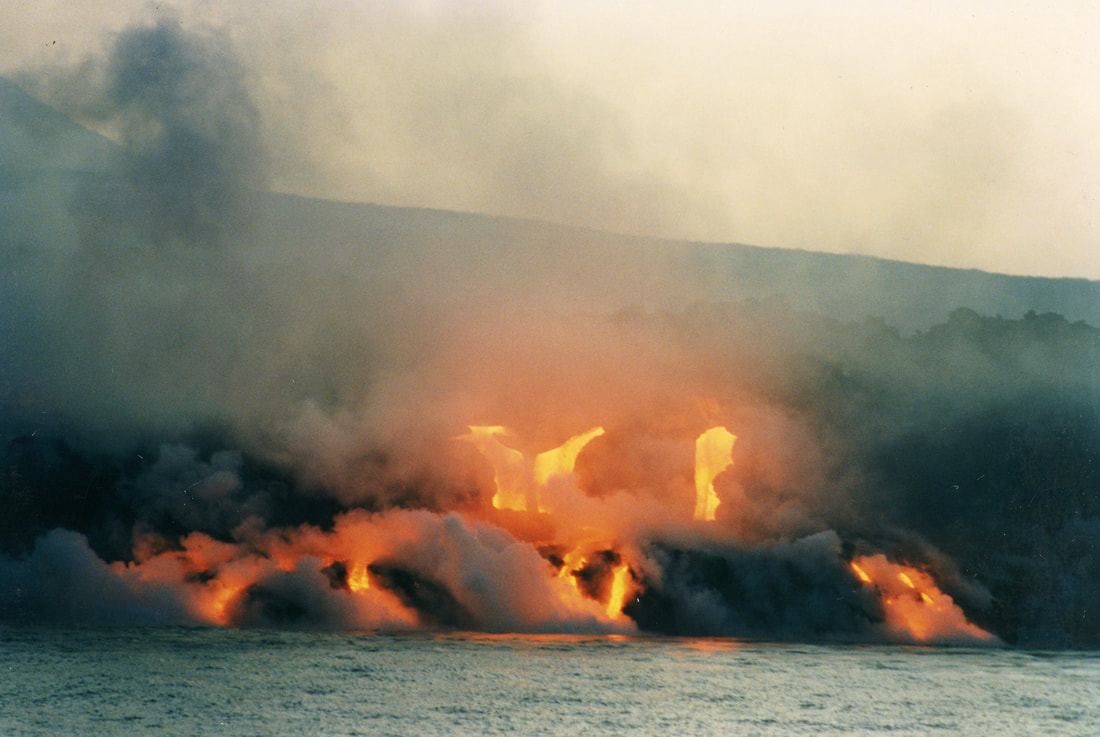
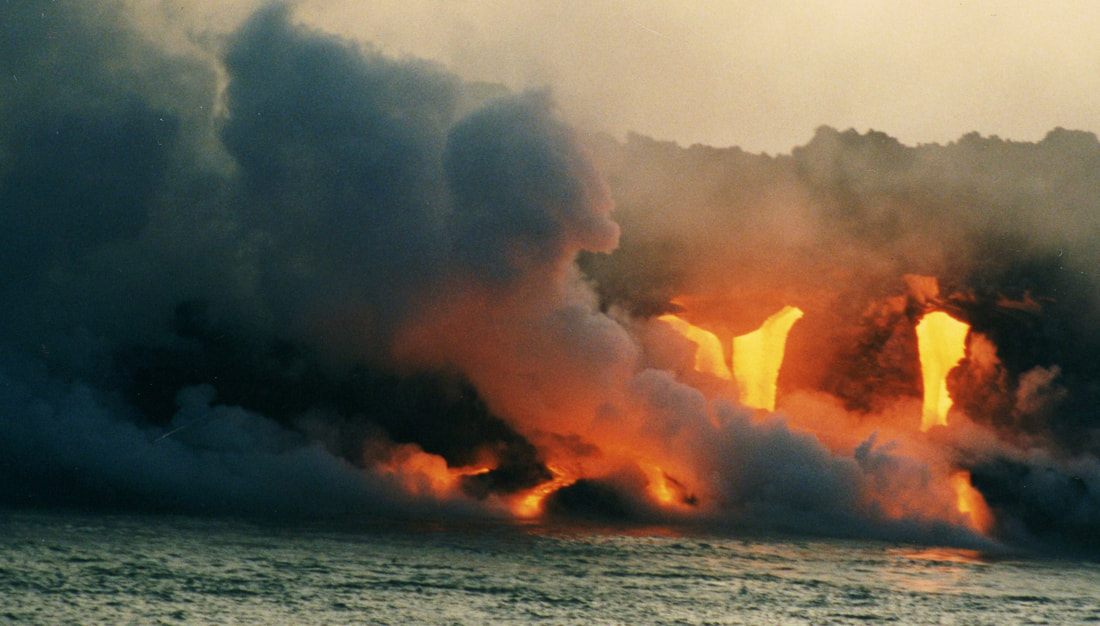
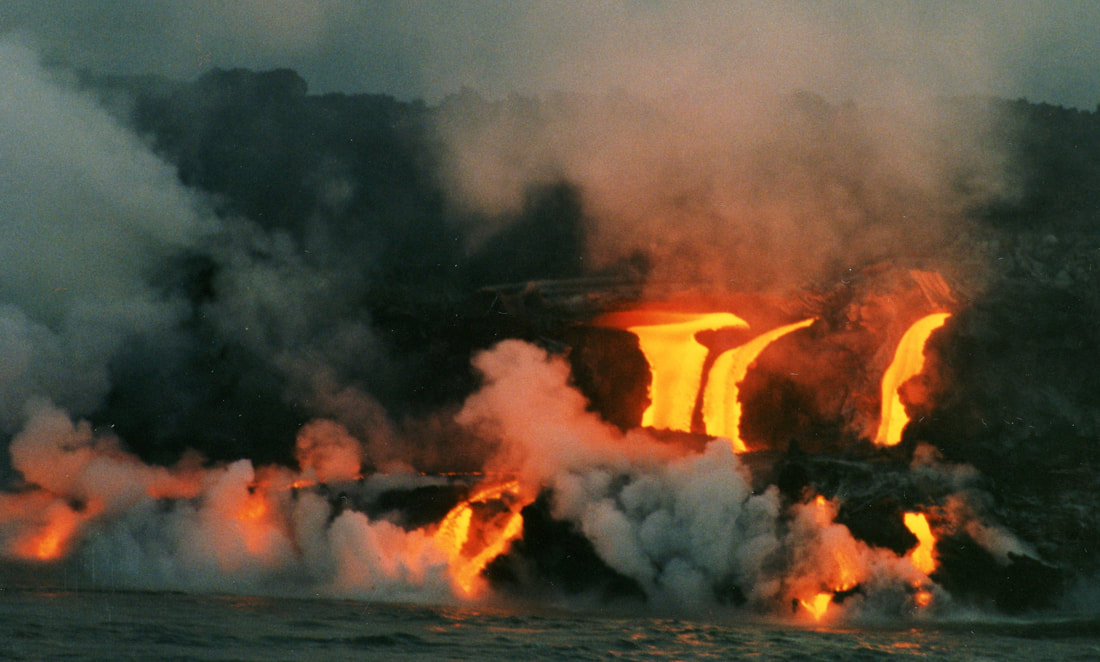
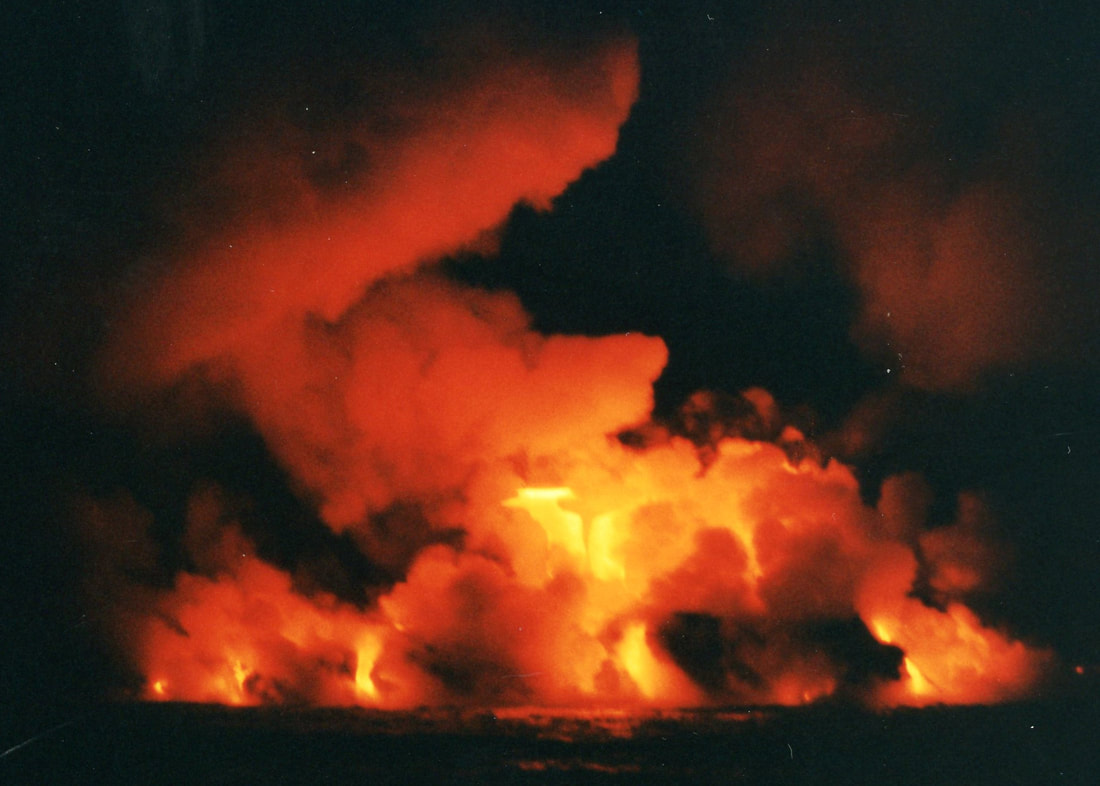
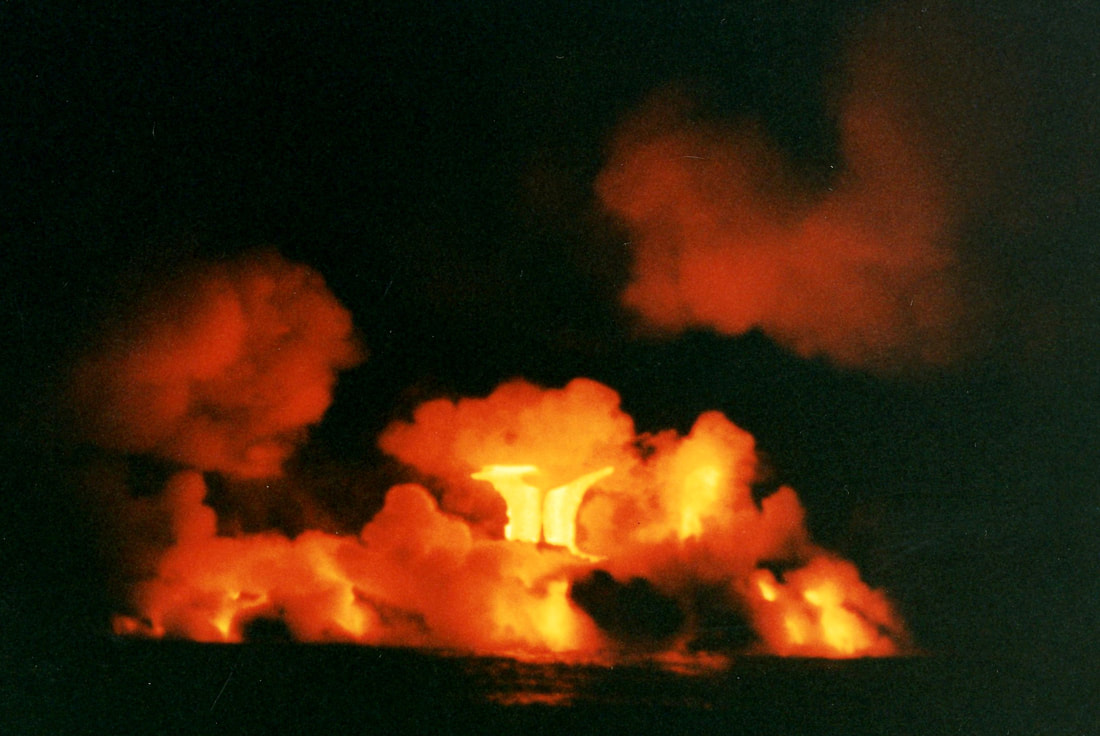
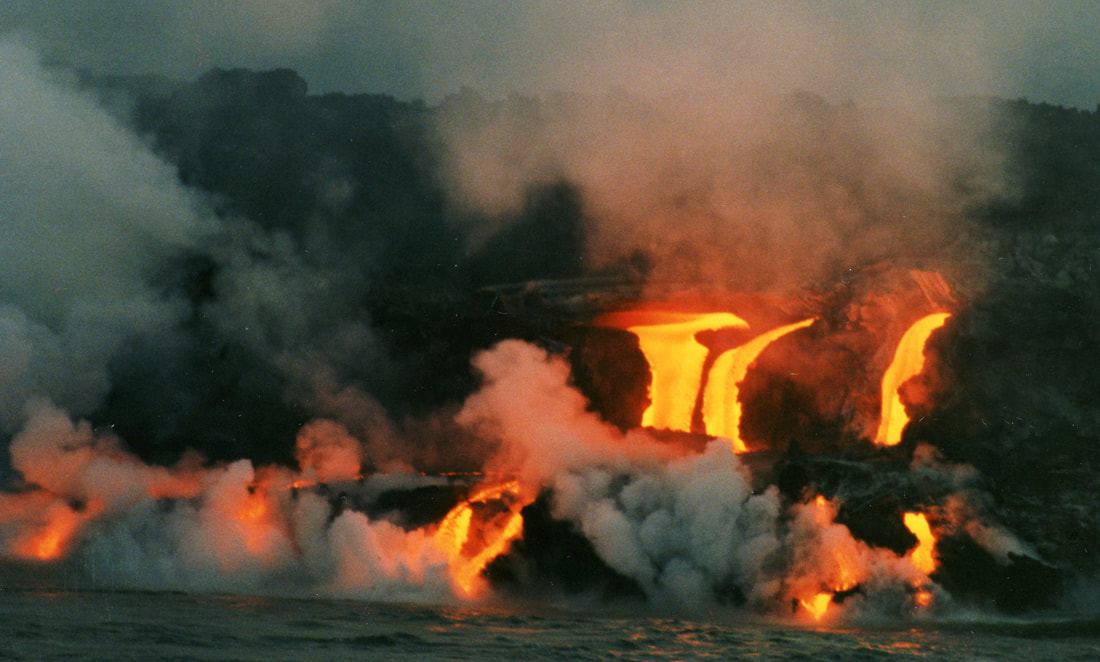
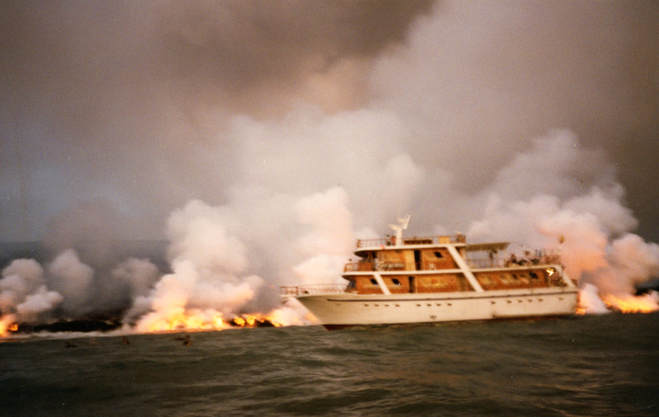
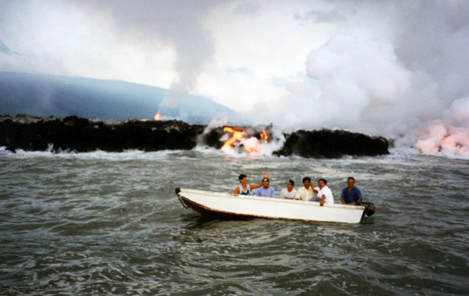
We were actually pretty close! But not close enough to be in danger. We measured the water temp where we were anchored and it was not above normal, surprisingly. We even took a dinghy ride
and got just a little closer.
and got just a little closer.
|
|
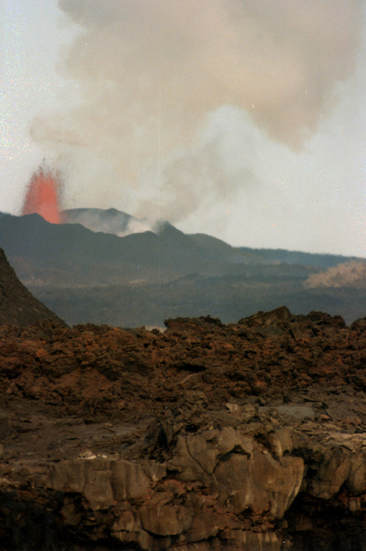
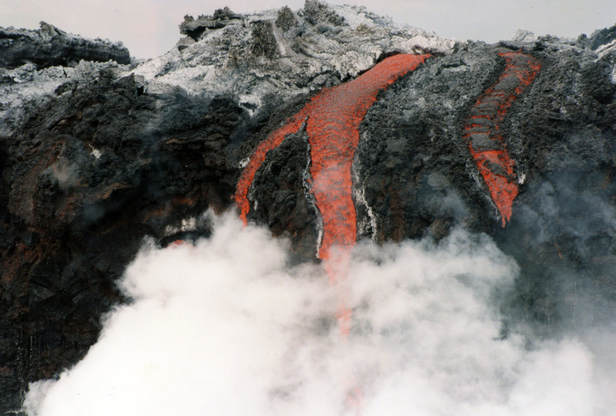
Occasionally the flows are more effusive (above, right), but not often. These are basaltic (oceanic) lava eruptions, which do not contain as much gas as andesitic (on land) volcanoes do and are thus
gentler. Eventually, things begin to cool down, to about 2000 Deg F or so.
gentler. Eventually, things begin to cool down, to about 2000 Deg F or so.
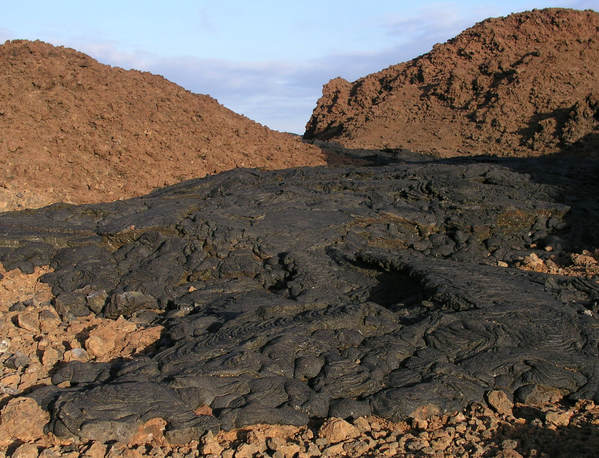
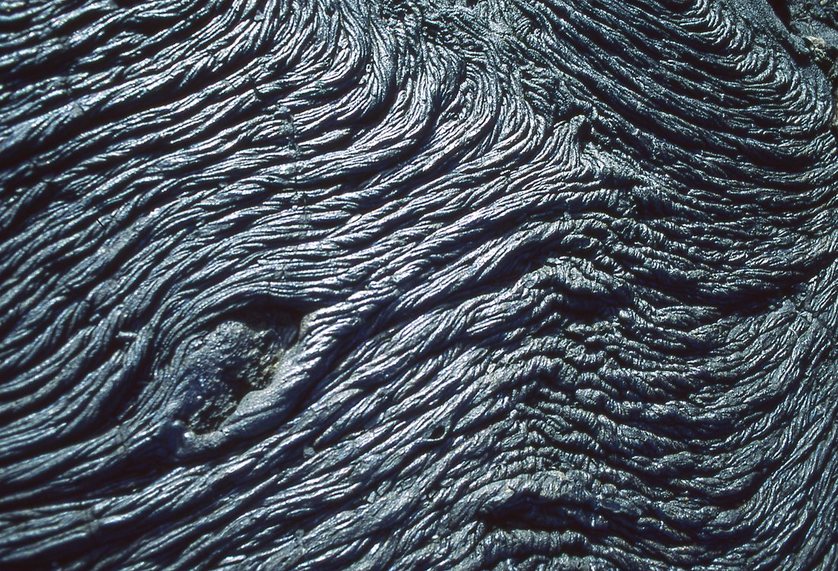
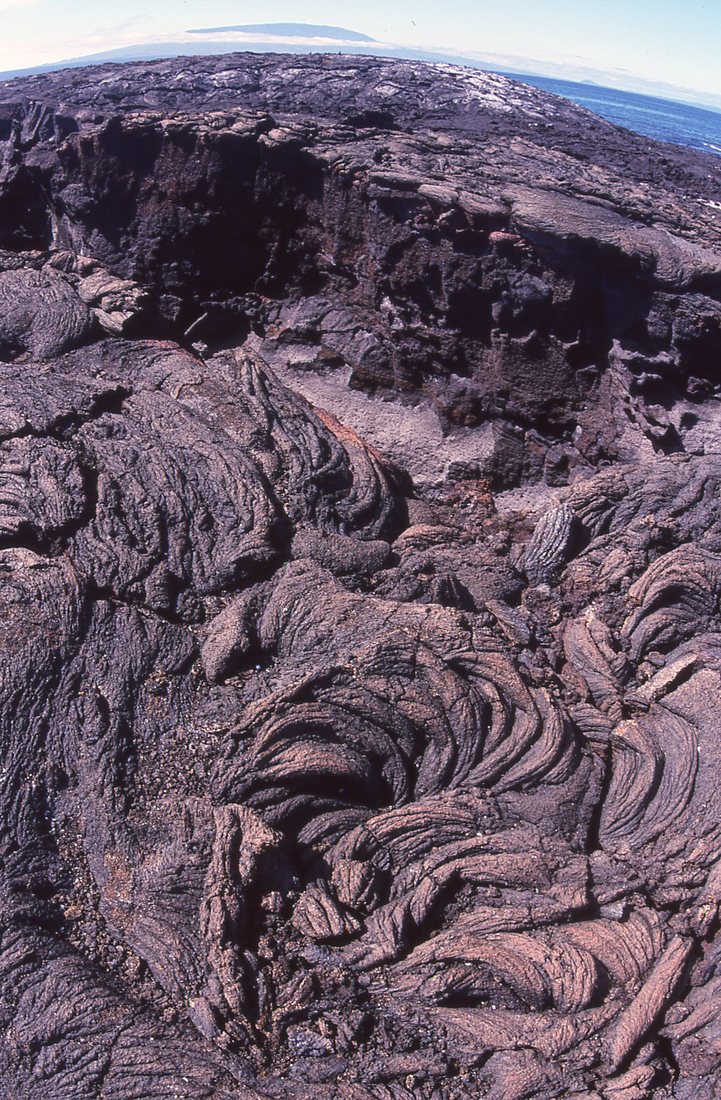
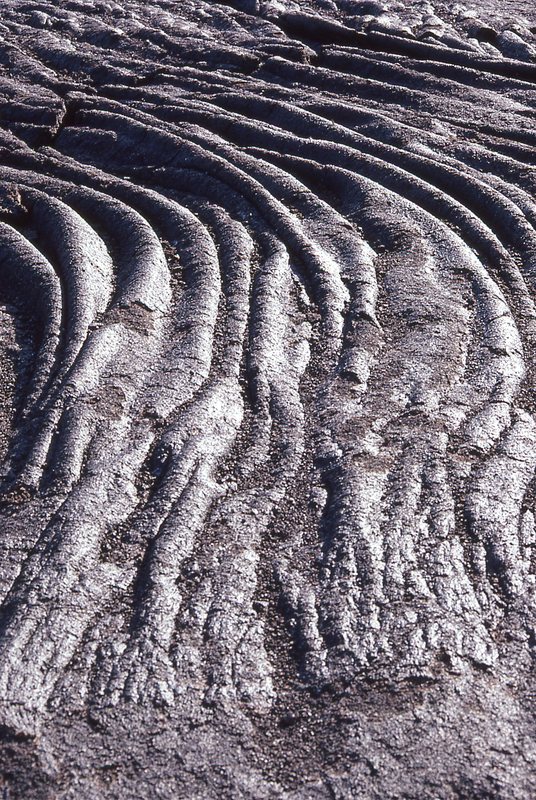
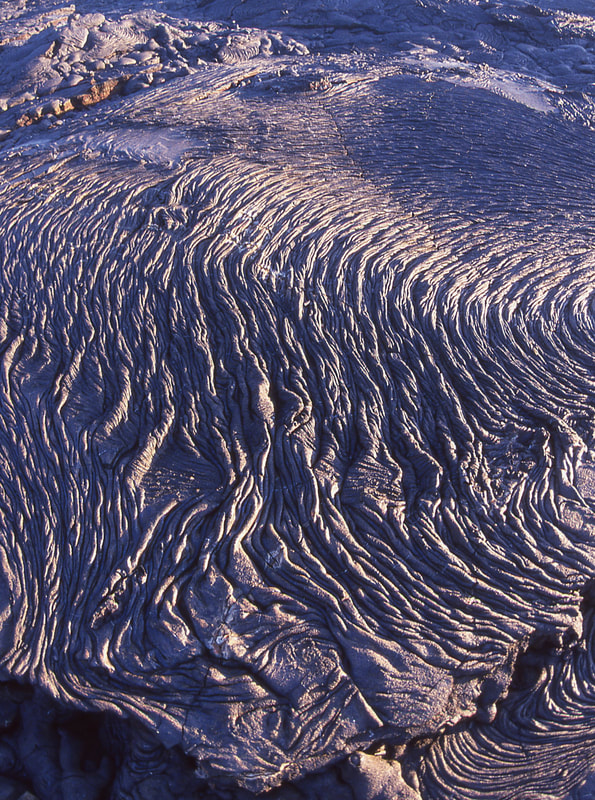
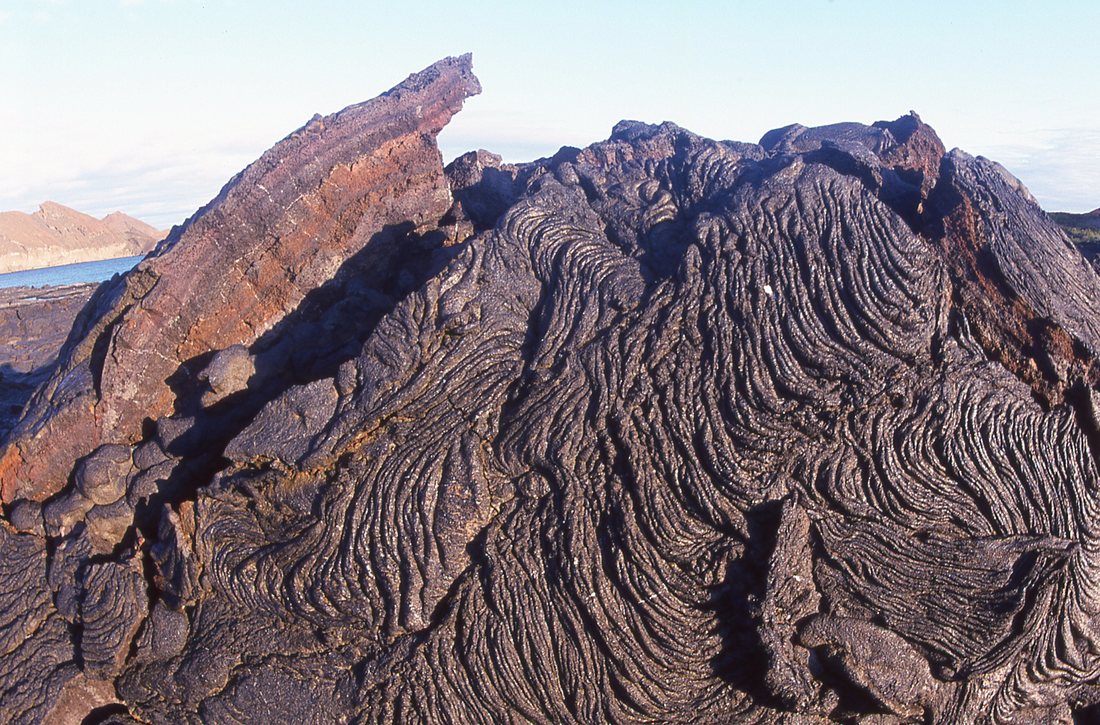
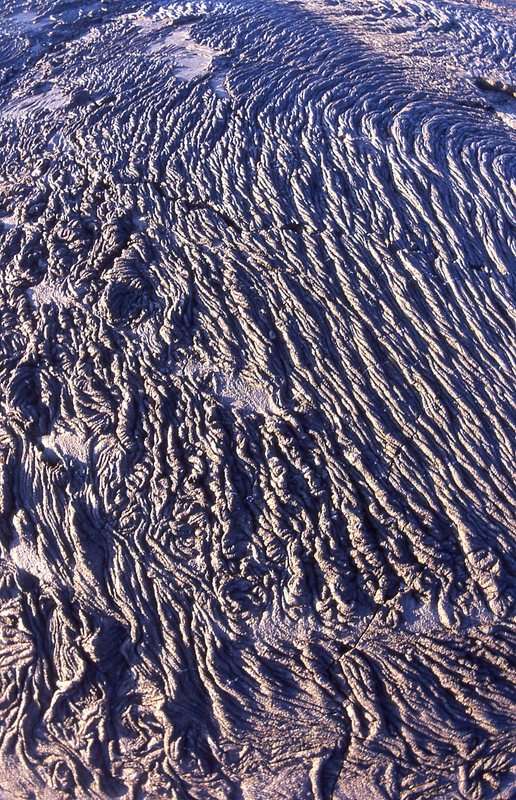
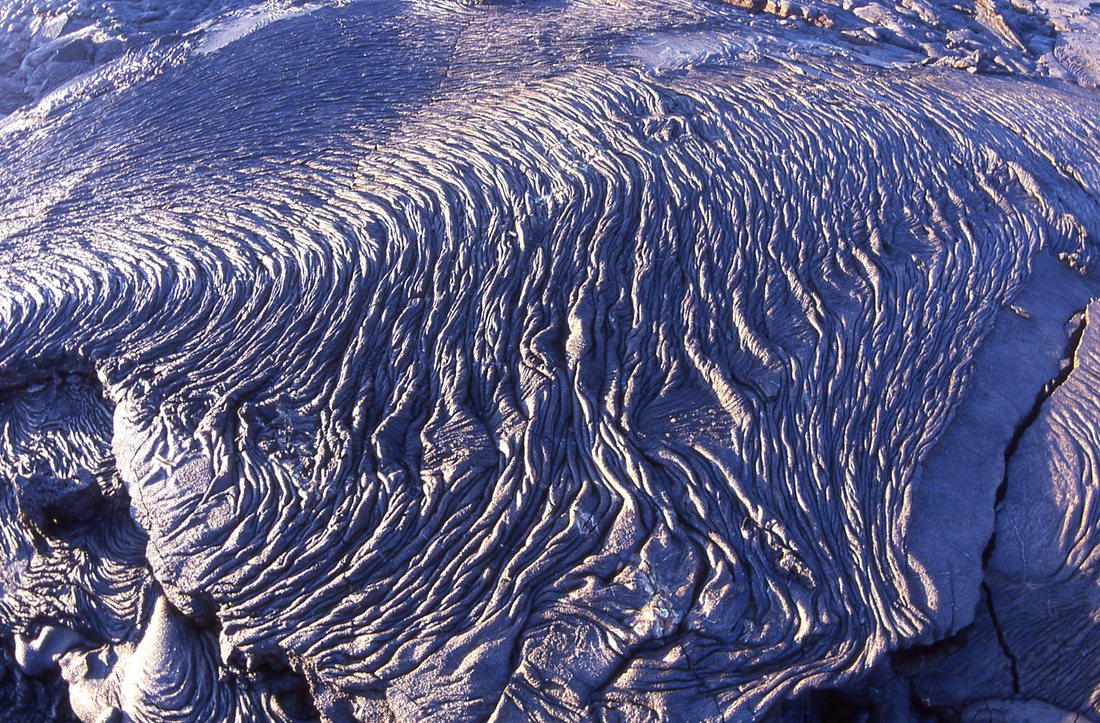
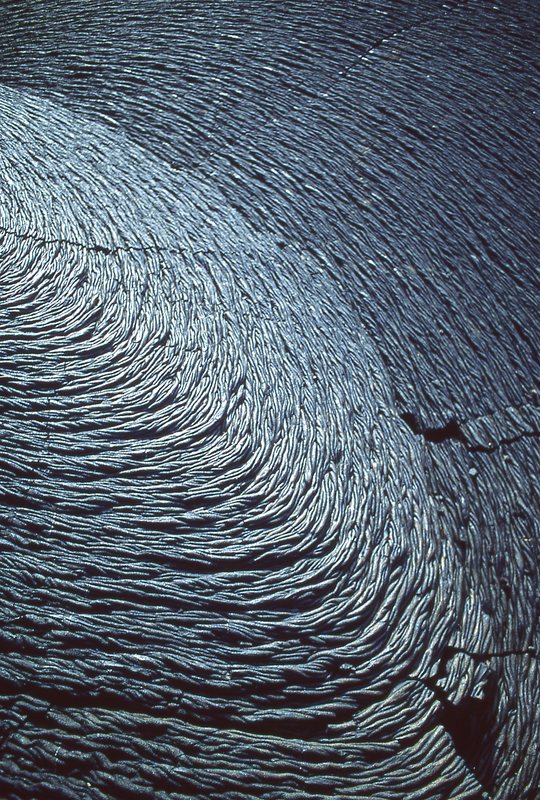
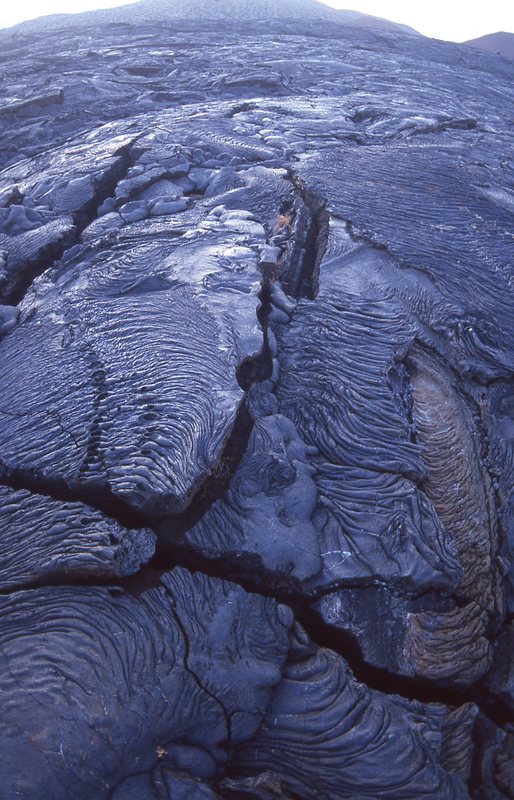
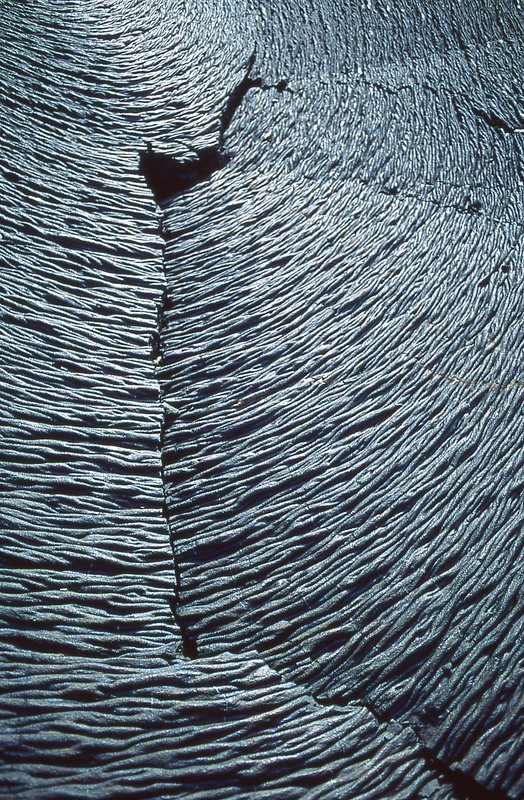
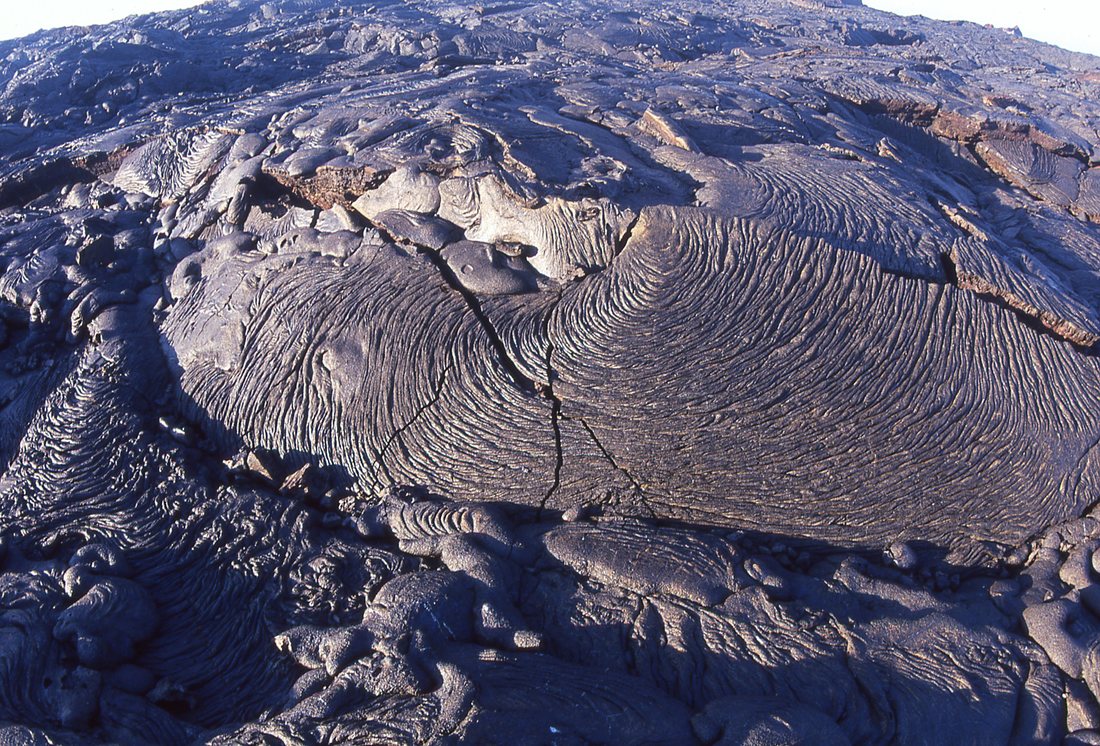
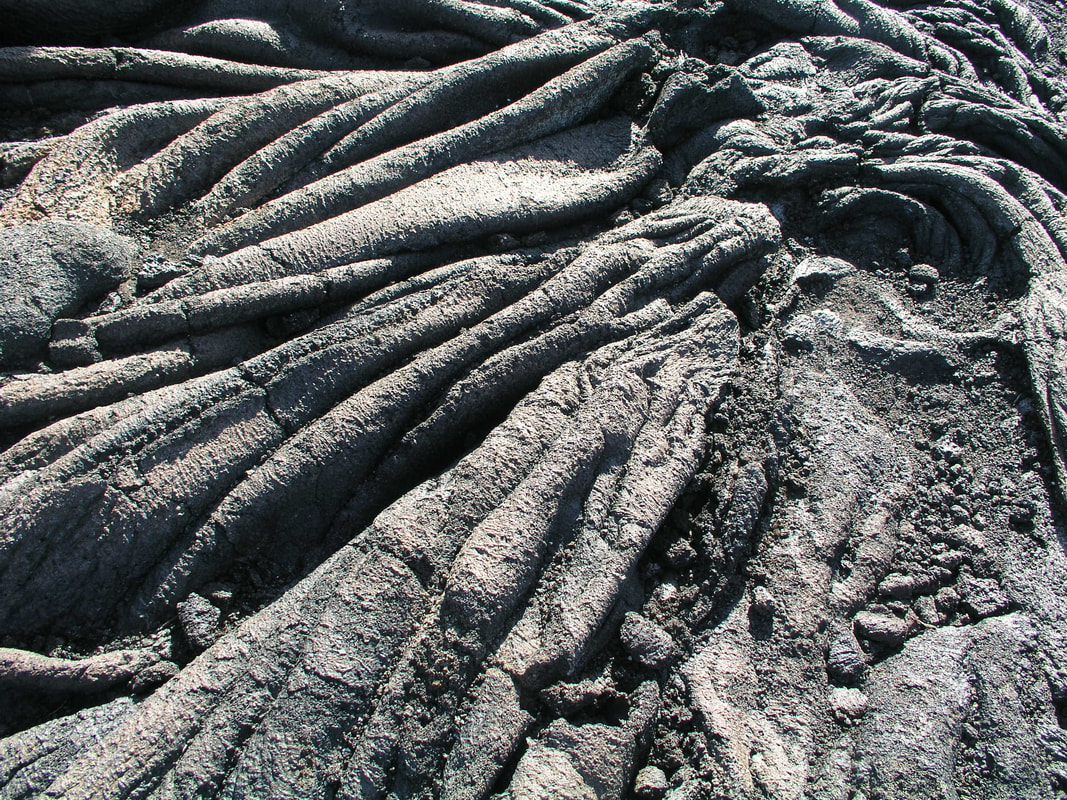
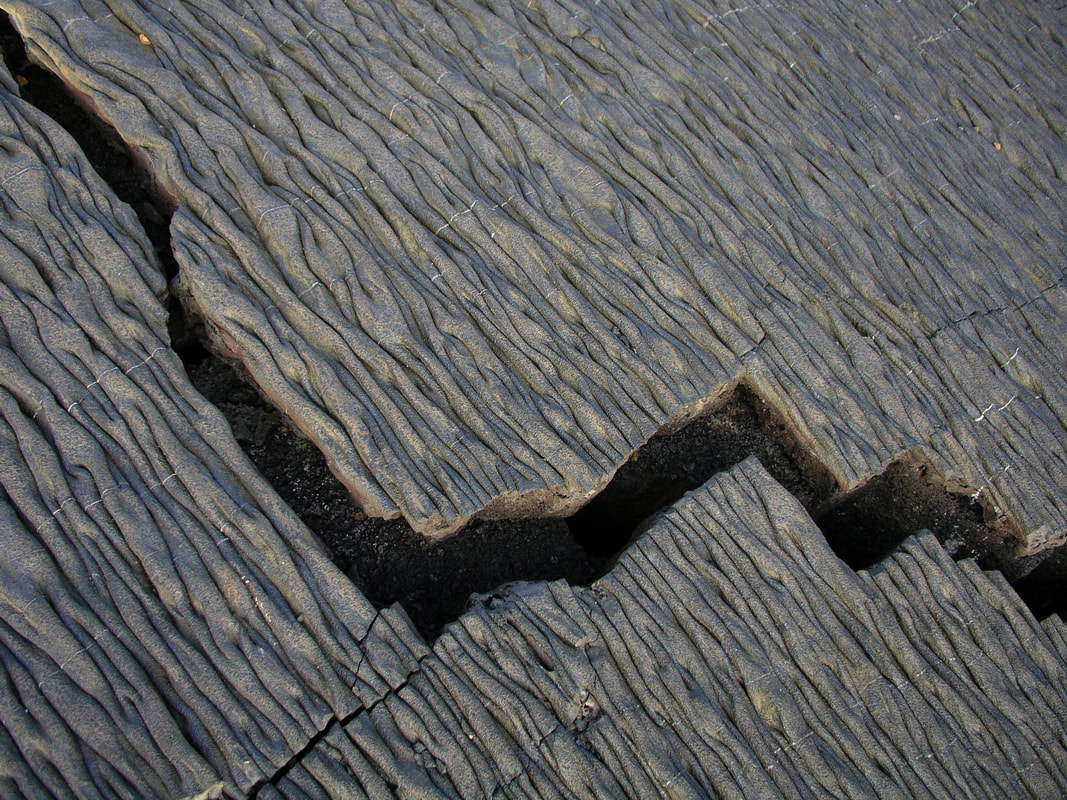
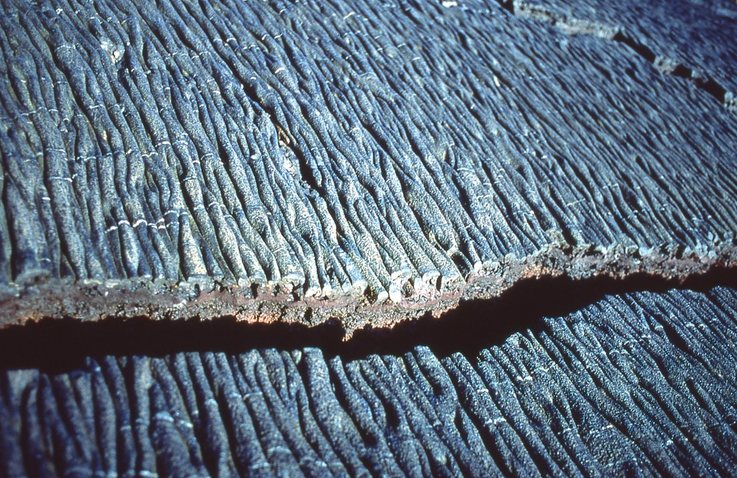
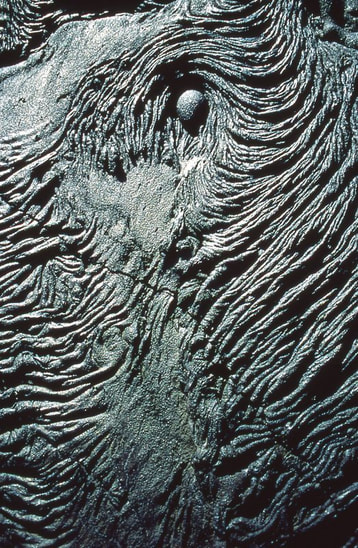
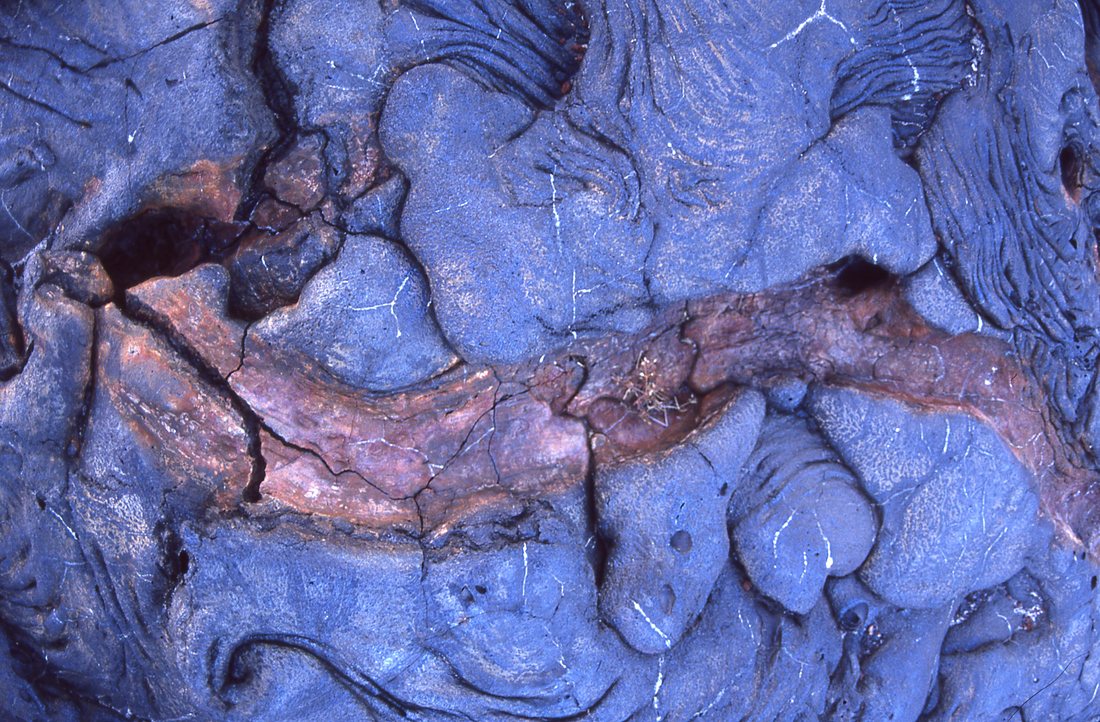
Finally, the lava stops flowing. As the lava flows downhill and cools, it often twists into ropy shapes
called pahoehoe lava (an Hawaiian term as these are Hawaiian-type flows).
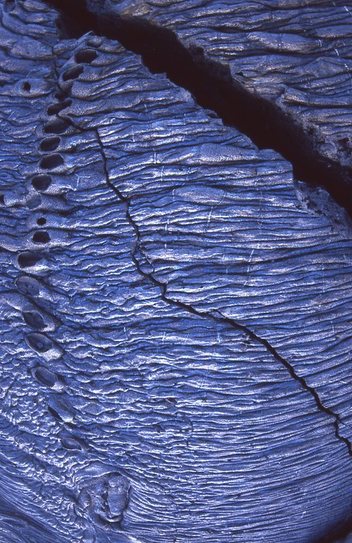
The final shapes are quite intricate and beautiful.
called pahoehoe lava (an Hawaiian term as these are Hawaiian-type flows).
The final shapes are quite intricate and beautiful.
|
|
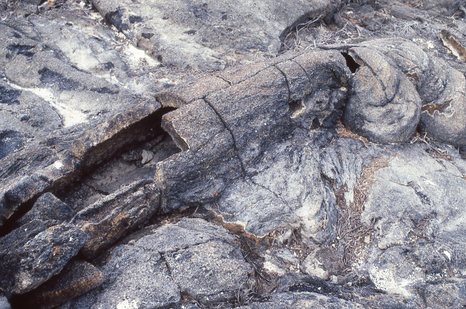
I actually gave silly names to some formations, such as the "lava egg"
and the "lava flute". All good fun.
and the "lava flute". All good fun.
|
|
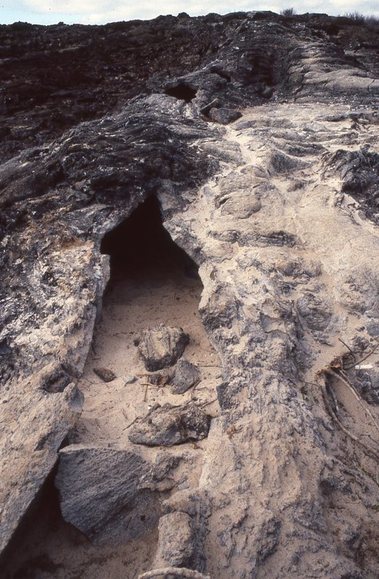
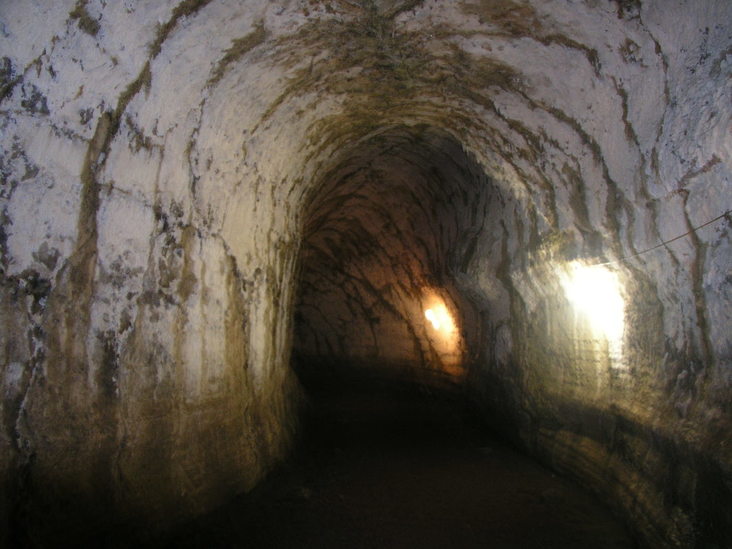
As the lava flows, its surface is a bit cooler and eventually solidifies; when the flow stops, the result is often a lava tube. Often, these structures are of a small diameter, but sometimes they are of a grand scale -
a walk-thru lava tunnel.
a walk-thru lava tunnel.
|
|
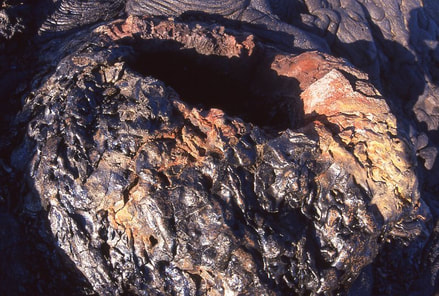
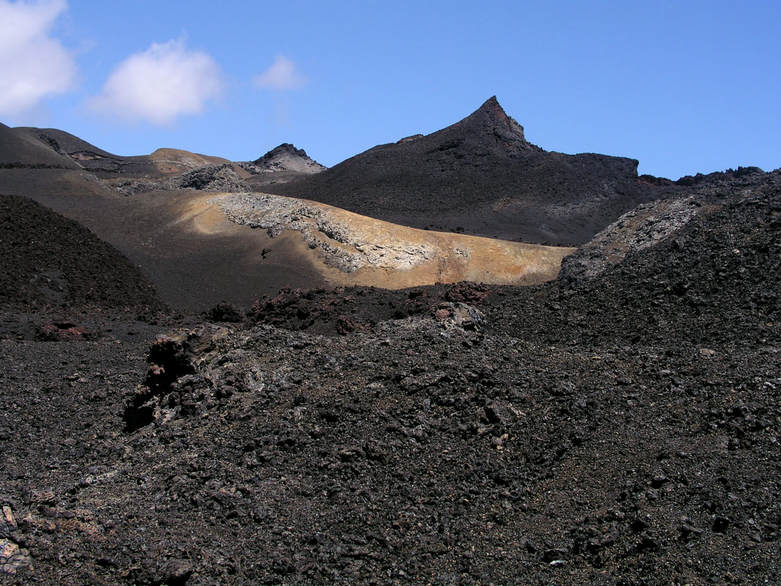
When lava flows near the shore, water can surge up as it solidifies, forming what is known in Spanish as an hornito (little oven - left photo above). If lava is flowing over existing vegetation, plants can be literally vaporized and their roots can be seen as traces or prints (right ).
Not all the lava is ropy pahoehoe. Accelerations in the flow can actually break into pieces (like stretching taffy quickly, forming rubble-like lava called "A'a," another Hawaiian term
that can be defined as "hurts like hell".
that can be defined as "hurts like hell".
|
|
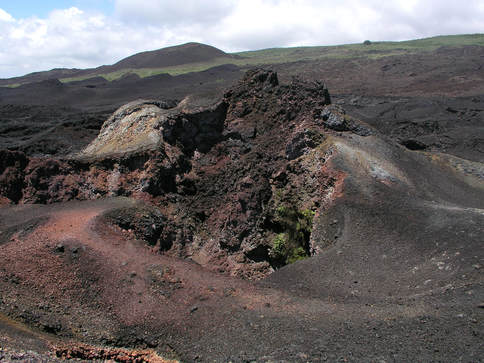
Lava contains several minerals, including iron. The iron can readily be seen in cinder cones, when lava, gas, and solids loosely clump together into what is called scoria. This material is vessicular
(has air pockets), and is light and crumbly.
(has air pockets), and is light and crumbly.
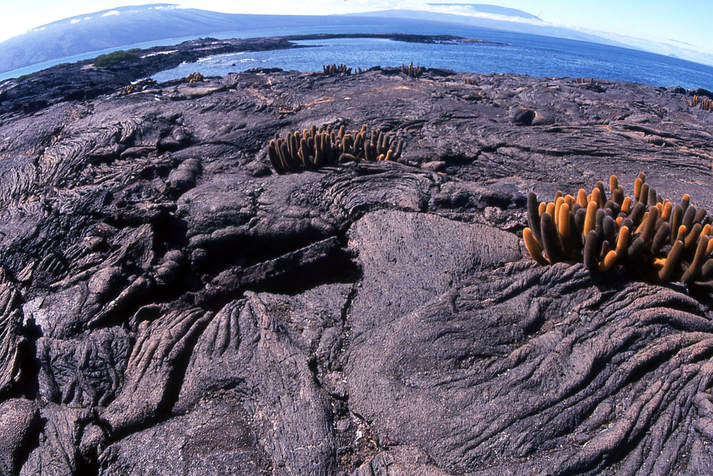
Eventually, the primordial combination of minerals, moisture, and maybe a little bird poop, provides enough of a "growing mix" for a pioneering plant, such as lava cactus, shown above. Some of us have jokingly called this the "beginning of the rain forest". In Hawaii, the vegetation could start within a hundred
years or so after an eruption, whereas in Galápagos it often takes thousands of years.
The difference - 200 inches of rain per year versus 10!
years or so after an eruption, whereas in Galápagos it often takes thousands of years.
The difference - 200 inches of rain per year versus 10!
|
|
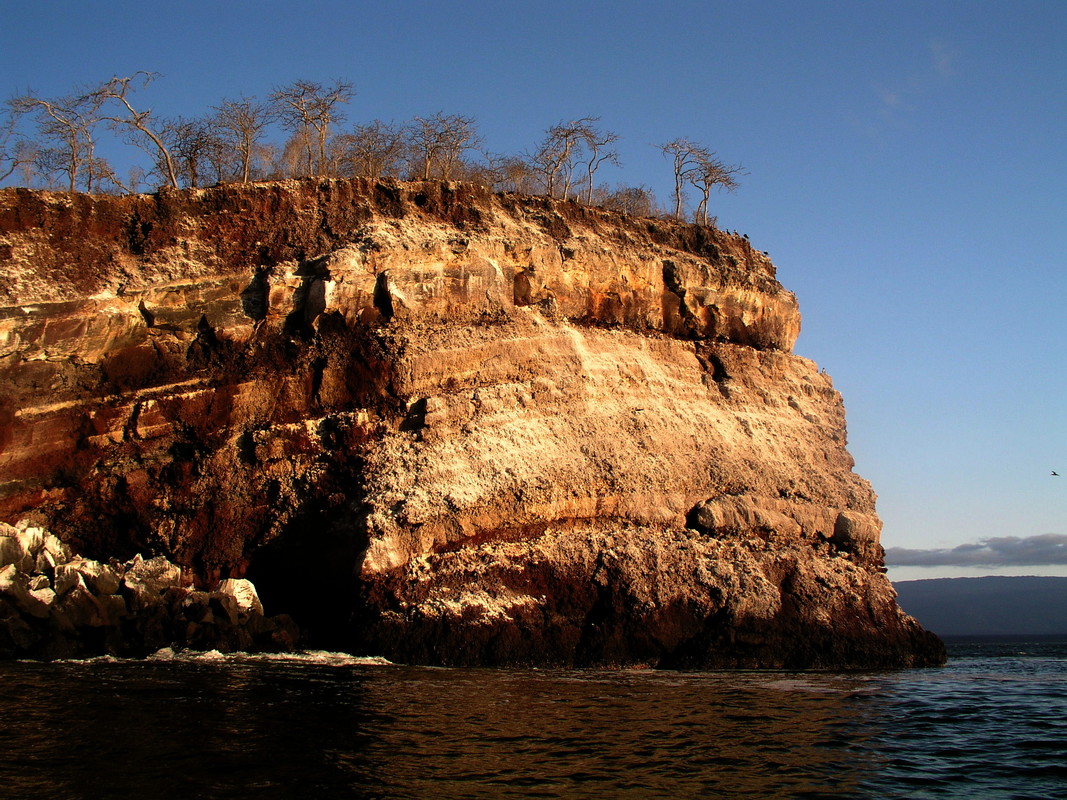
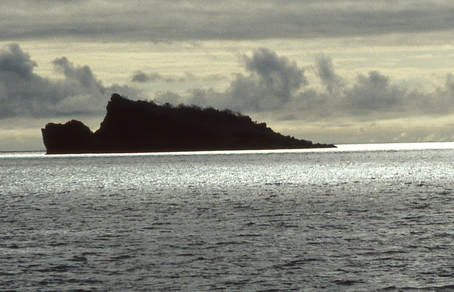
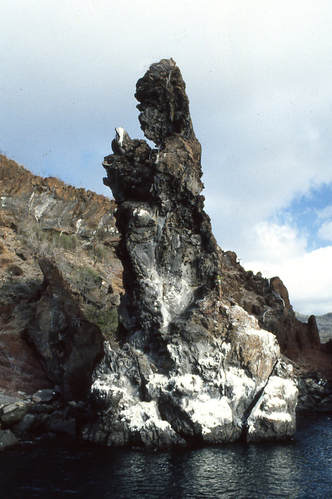
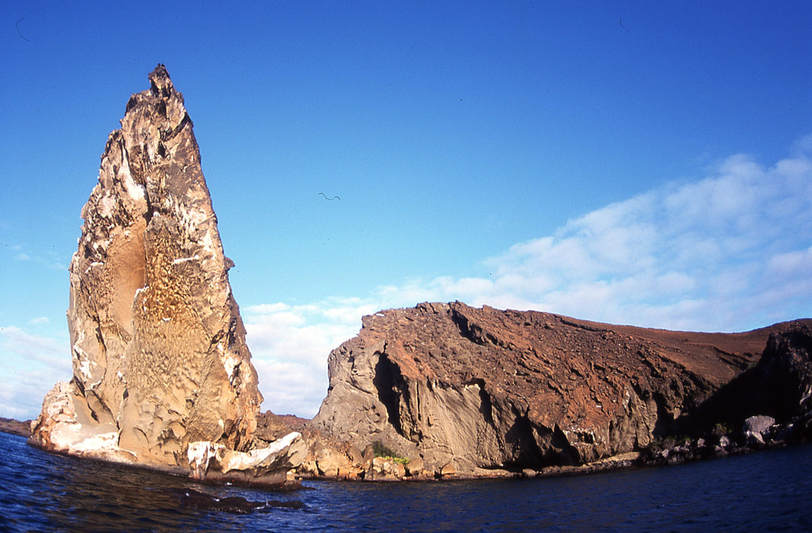
In time, a number of rocky islets form. Many are given informal names, based on their shape,
such as Turtle Rock and The Monk (above). One of the most famous and certainly
the most photographed is Pinnacle Rock (below).
such as Turtle Rock and The Monk (above). One of the most famous and certainly
the most photographed is Pinnacle Rock (below).
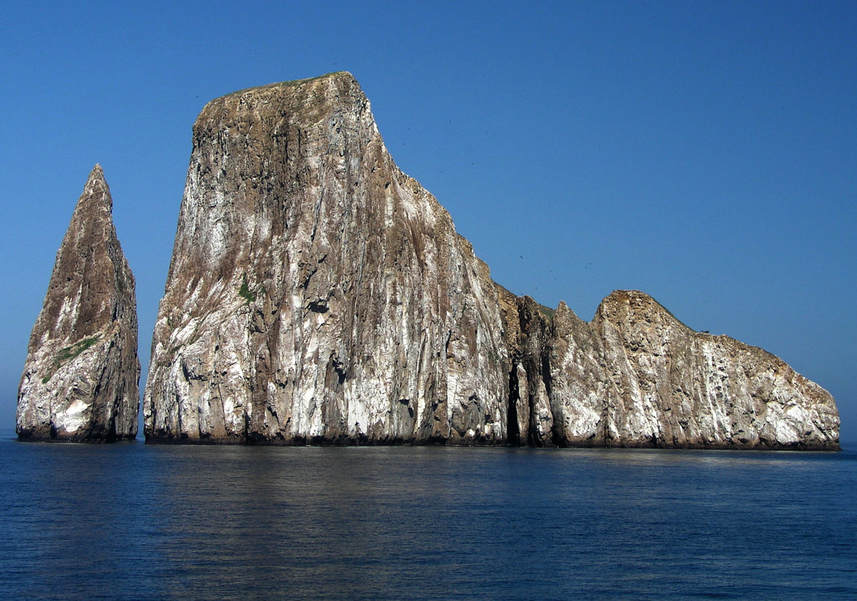
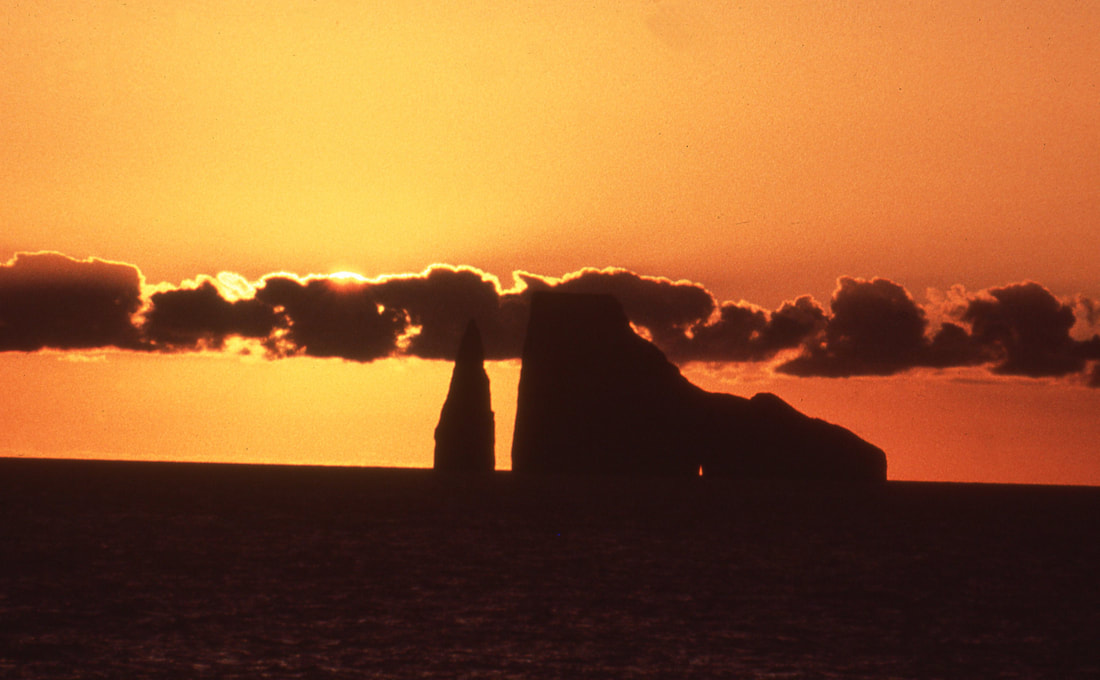
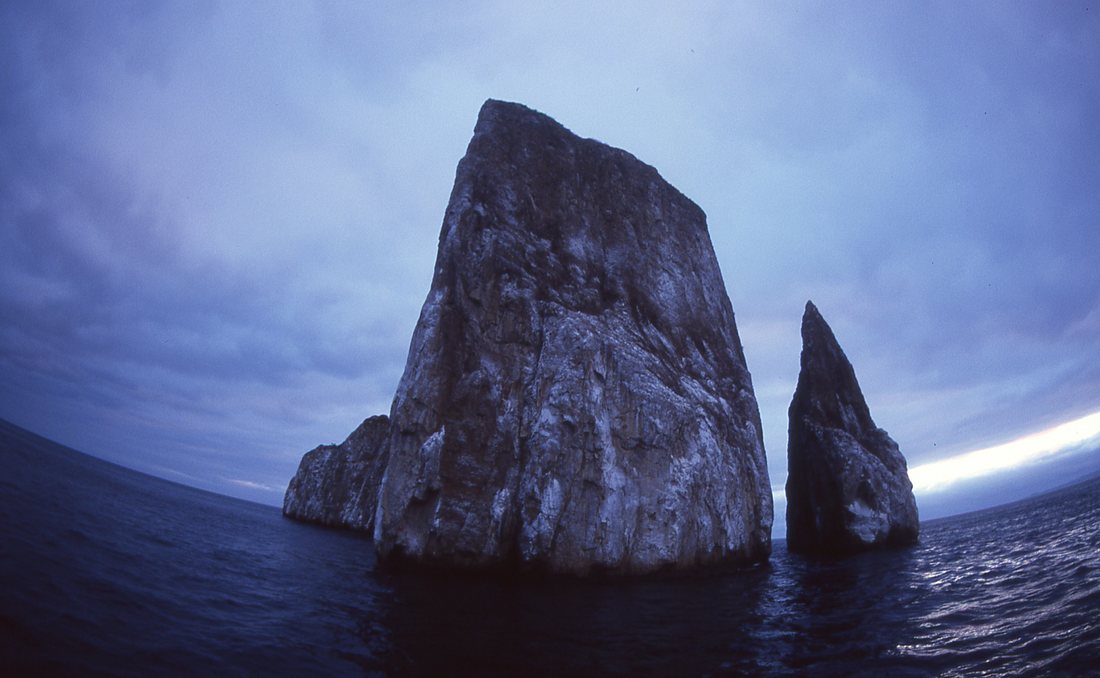
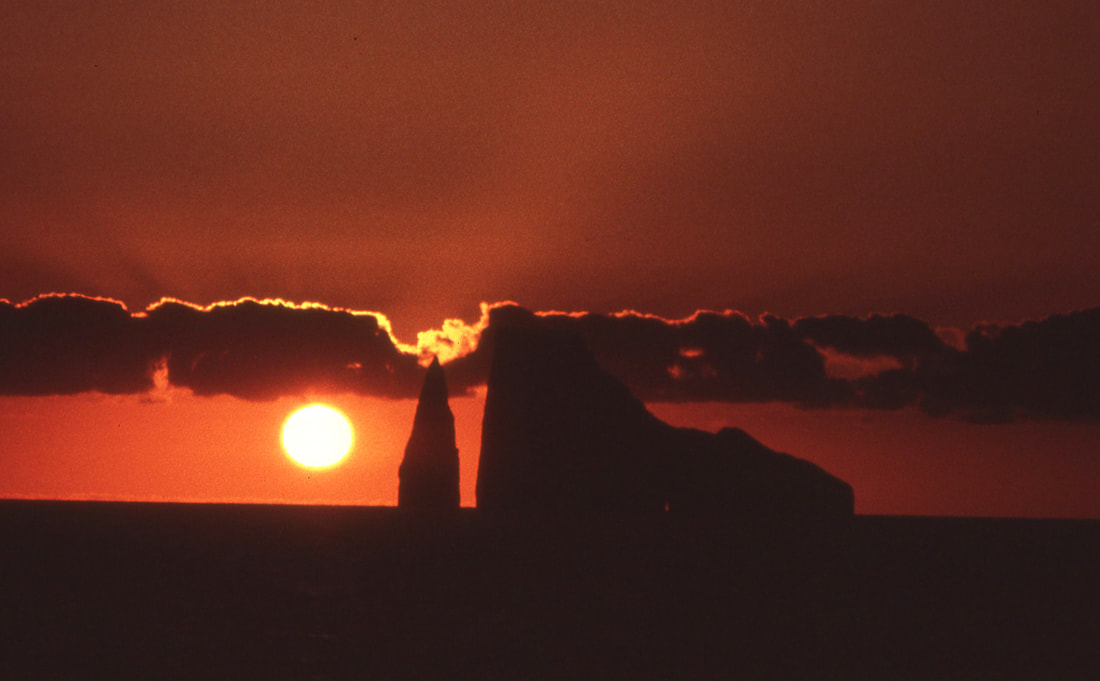
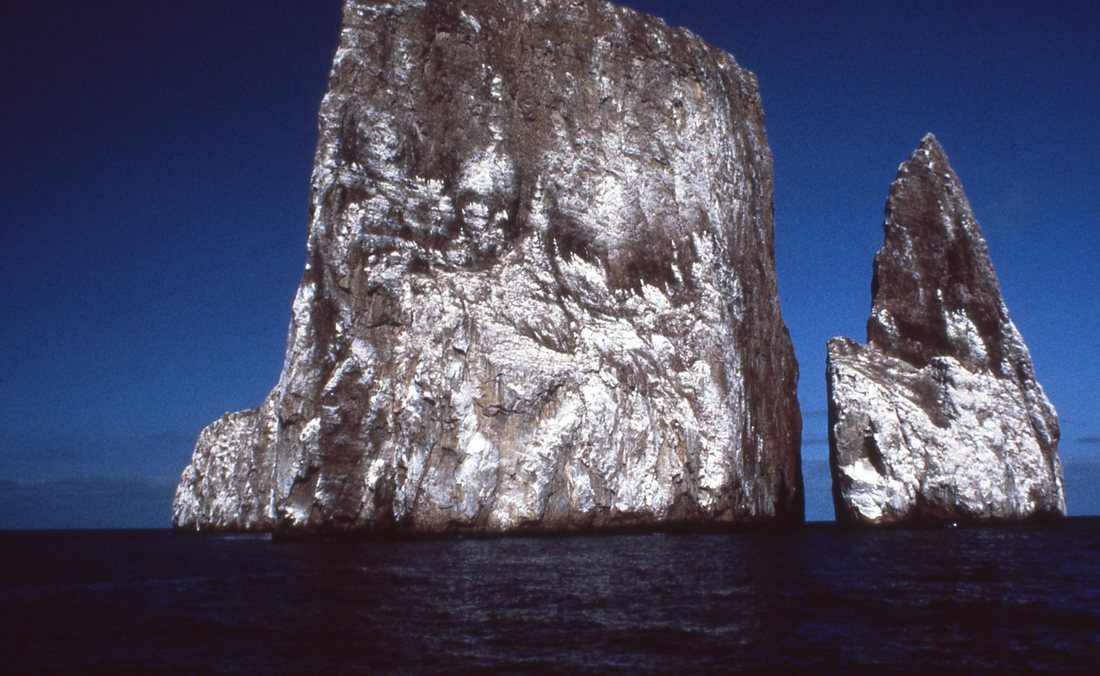
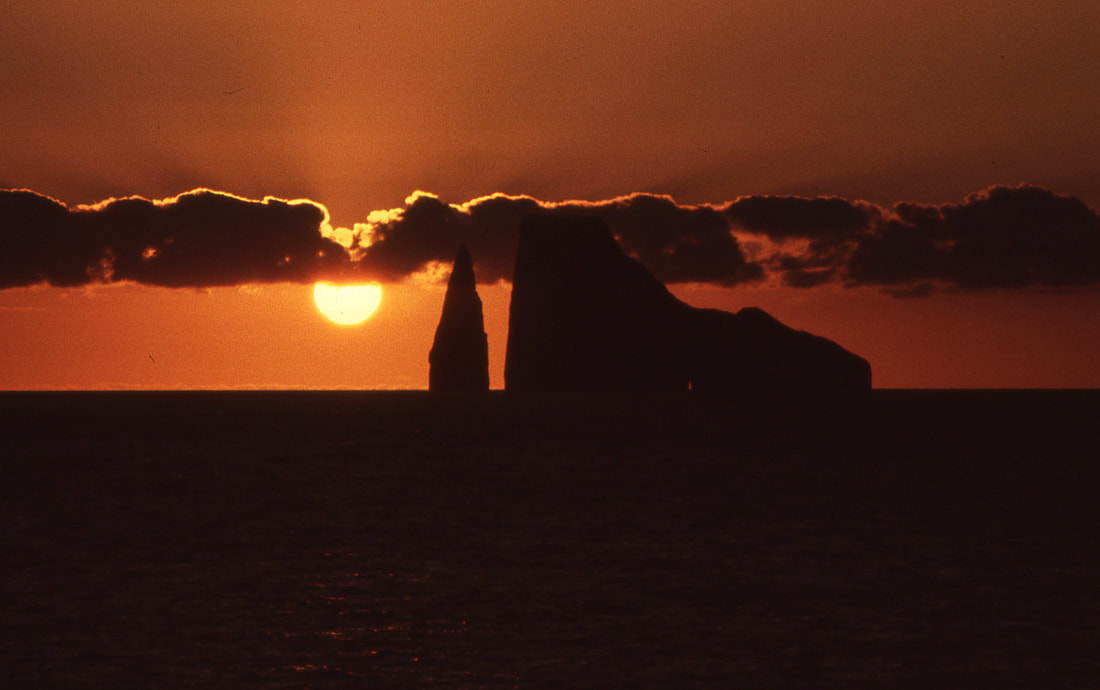
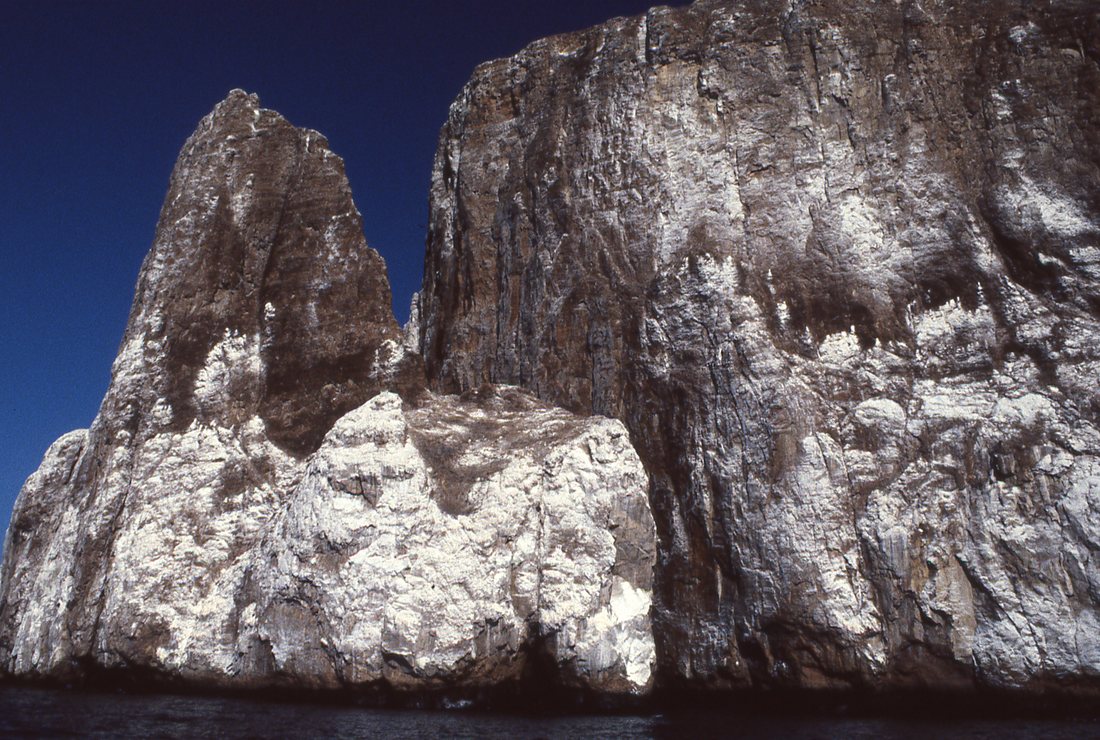
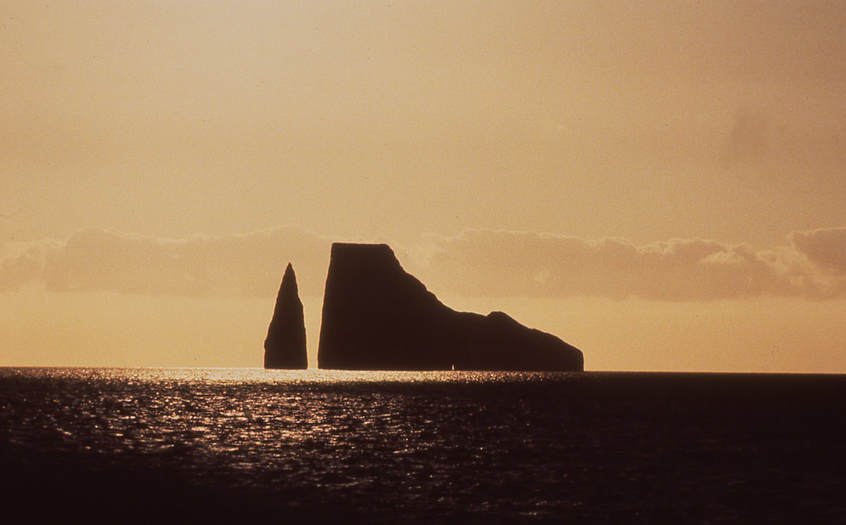
Just about as well known is Kicker Rock (it kinda sorta looks like a hiking shoe) - also known as
Leon Dormido (Sleeping Lion). It's a great sunrise or sunset visit/ photo op. Geologically, it's an
off-shore tuff (or ash) cone. In addition to great photography and geology, Kicker Rock is a
wonderful (although I'd call it advanced, due to currents) snorkeling site. There's always
the possibility of seeing a school of Galápagos Sharks here.
Leon Dormido (Sleeping Lion). It's a great sunrise or sunset visit/ photo op. Geologically, it's an
off-shore tuff (or ash) cone. In addition to great photography and geology, Kicker Rock is a
wonderful (although I'd call it advanced, due to currents) snorkeling site. There's always
the possibility of seeing a school of Galápagos Sharks here.
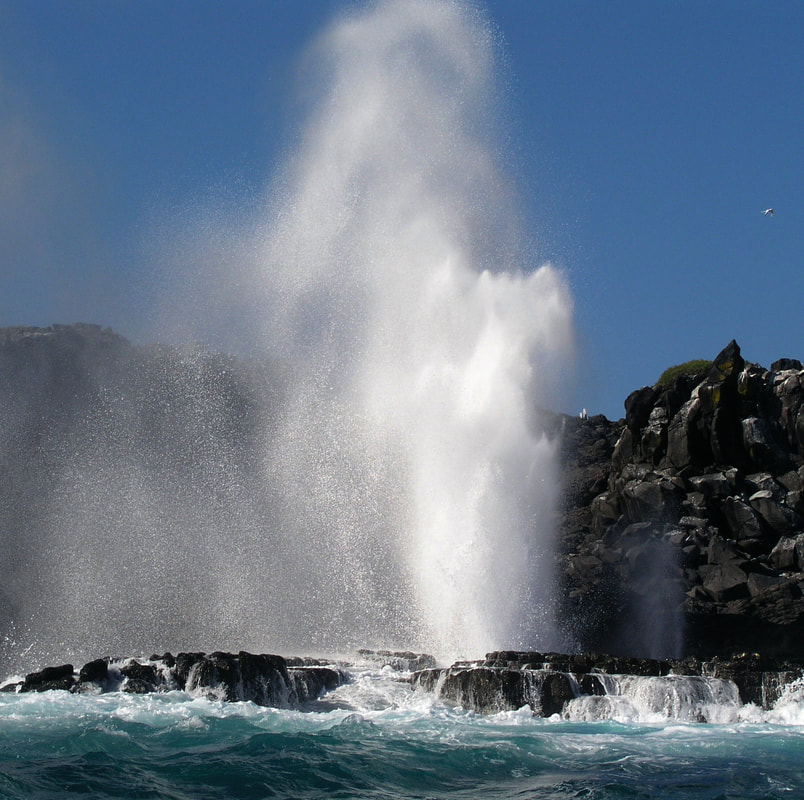
Fissures form between some of the lava rocks, and waves funnel thru these cracks,
developing high pressure and spectacular blow holes spout forth.
Quite a show, sight, and sound.
developing high pressure and spectacular blow holes spout forth.
Quite a show, sight, and sound.
|
|
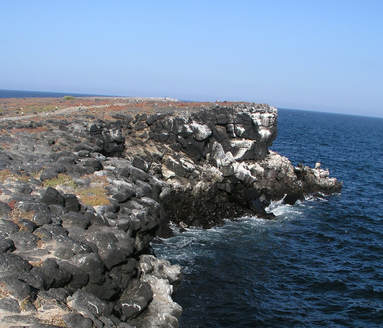
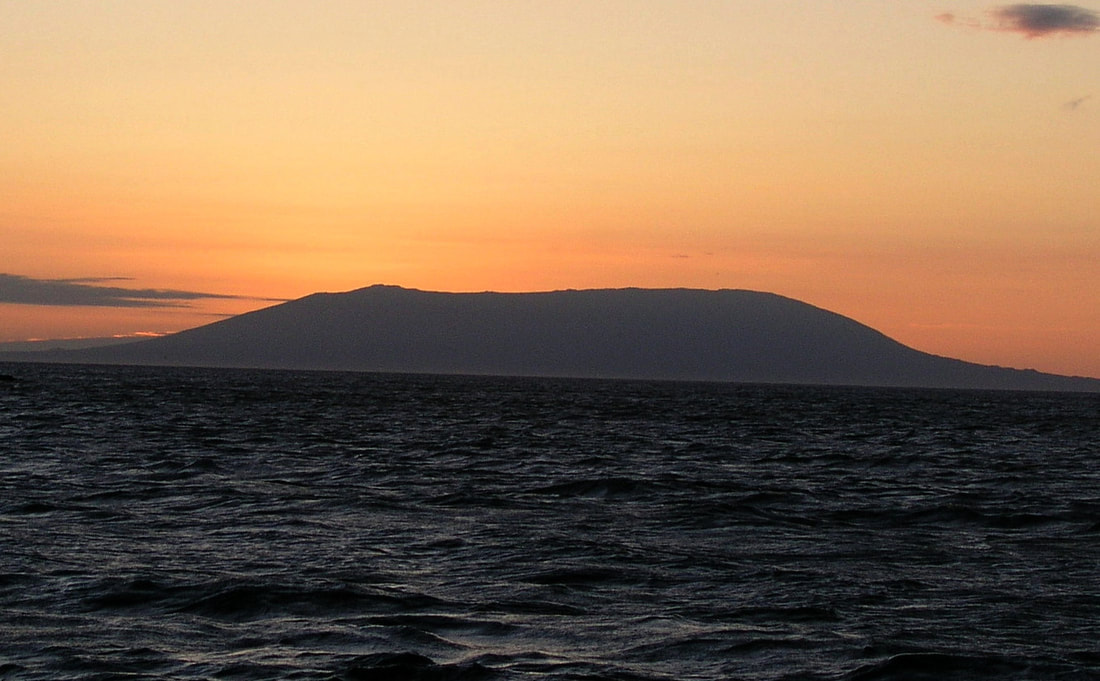
Some oceanic volcanic islands form from a central vent called a caldera. Being basaltic, they are not very effusive, forming "shield volcanoes" (above right); turned on its side, it does have a shield-like shape.
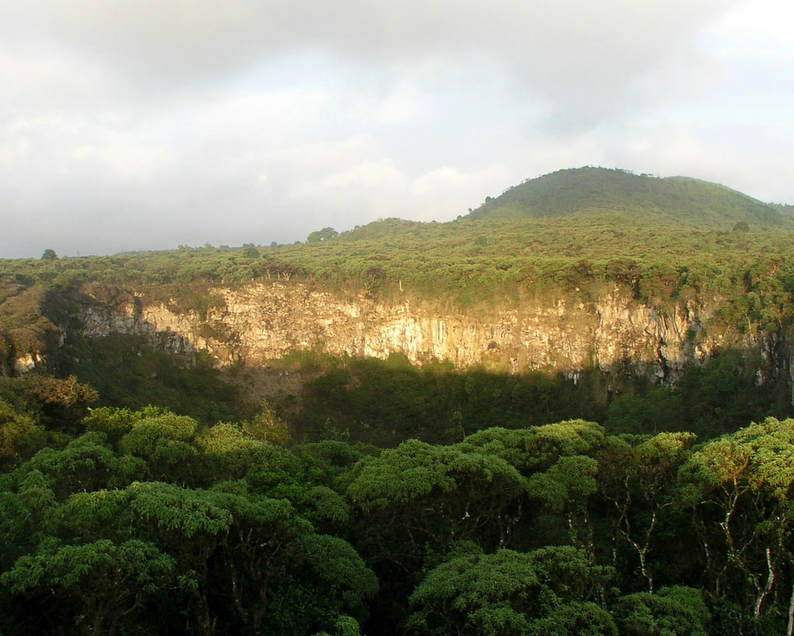
Other islands do not form from a central vent; they arise from lava spewing from a fissure on the ocean bottom and they take a low, flat, tilted shape and are called "uplifted" islands (above left). The shield volcanoes are generally about 3000 ft. high, and due to an inversion layer in the atmosphere, the
Highlands are quite moist with lush vegetation.
Other islands do not form from a central vent; they arise from lava spewing from a fissure on the ocean bottom and they take a low, flat, tilted shape and are called "uplifted" islands (above left). The shield volcanoes are generally about 3000 ft. high, and due to an inversion layer in the atmosphere, the
Highlands are quite moist with lush vegetation.
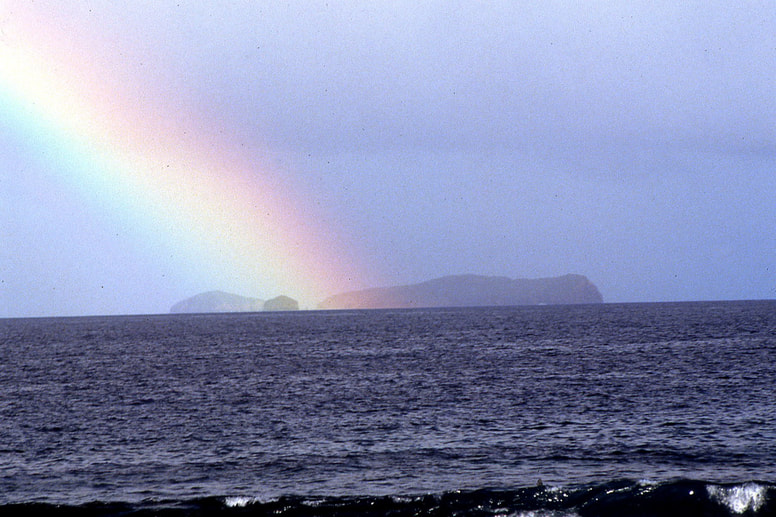
The Galápagos is still forming, as the Hotspot is still active; new islands will appear at some unknown time in the future - to the west of the islands of Fernandina and Isabela (which are the closest
to the Hotspot and also the youngest).
to the Hotspot and also the youngest).