RAJA AMPAT - THE CORAL TRIANGLE
The Coral Triangle is one of the last places on this planet where coral is still relatively healthy and
colorful as well as abundant, with nearly 600 species of reef-building corals. It is recognized
and referred to as a “global center for marine biodiversity”. The more or less triangular tropical
location includes the Philippines, Indonesia, Malaysia and Papua New Guinea. In 2024 my fiancée Andrea and I visited a spectacular part of the triangle called Raja Ampat, (formerly called Irian Jaya). The name Raja Ampat is translated as “4 Kings,” referring to the once-upon-a-timerulers of four of the larger islands in the chain. The photos here, while taken with a relatively simple, inexpensive camera (Olympus Tough TG5® - see the French Polynesia section for a description), will
attest to the beauty of Raja Ampat. Rather than mostly taking close-ups of the fish as I usually do, I was
soon captivated by magnificent views of the coral. To capture the detail, I shot in the Raw mode.
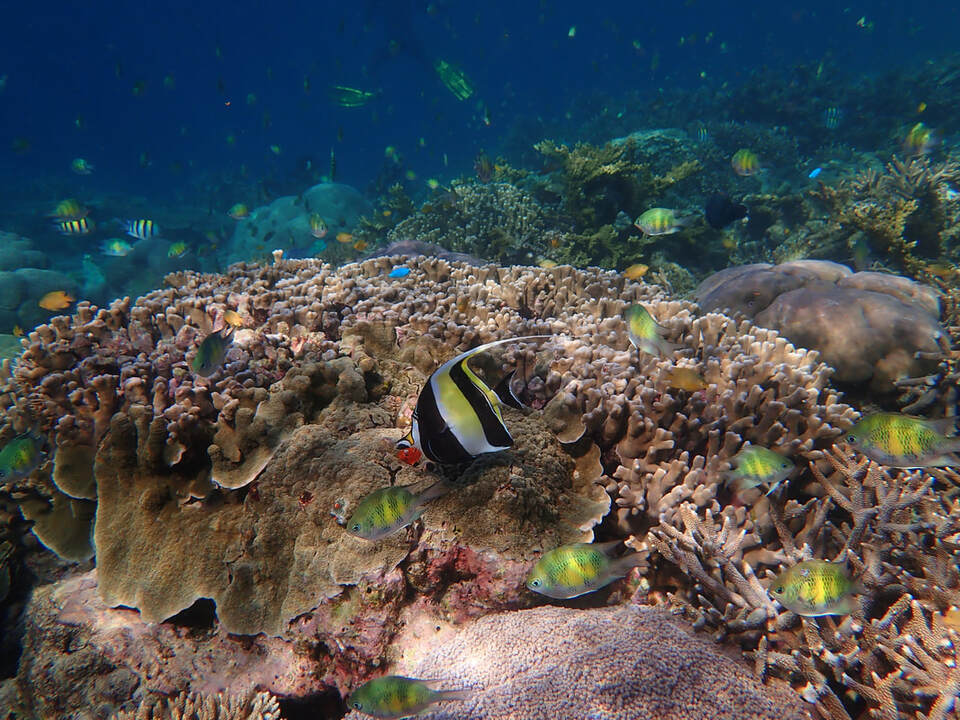
colorful as well as abundant, with nearly 600 species of reef-building corals. It is recognized
and referred to as a “global center for marine biodiversity”. The more or less triangular tropical
location includes the Philippines, Indonesia, Malaysia and Papua New Guinea. In 2024 my fiancée Andrea and I visited a spectacular part of the triangle called Raja Ampat, (formerly called Irian Jaya). The name Raja Ampat is translated as “4 Kings,” referring to the once-upon-a-timerulers of four of the larger islands in the chain. The photos here, while taken with a relatively simple, inexpensive camera (Olympus Tough TG5® - see the French Polynesia section for a description), will
attest to the beauty of Raja Ampat. Rather than mostly taking close-ups of the fish as I usually do, I was
soon captivated by magnificent views of the coral. To capture the detail, I shot in the Raw mode.
A coral reef community is an entire ecosystem of a wide variety of interacting species, including a couple thousand
reef fish, sharks, and sea turtles that feed in and find shelter here. Many corals are plantlike in appearance, but they are actually colonial invertebrate animals of the phylum Cnidaria, related to jellyfish and sea anemones. The “colony” is made up of thousands of polyps that act as a single organism.
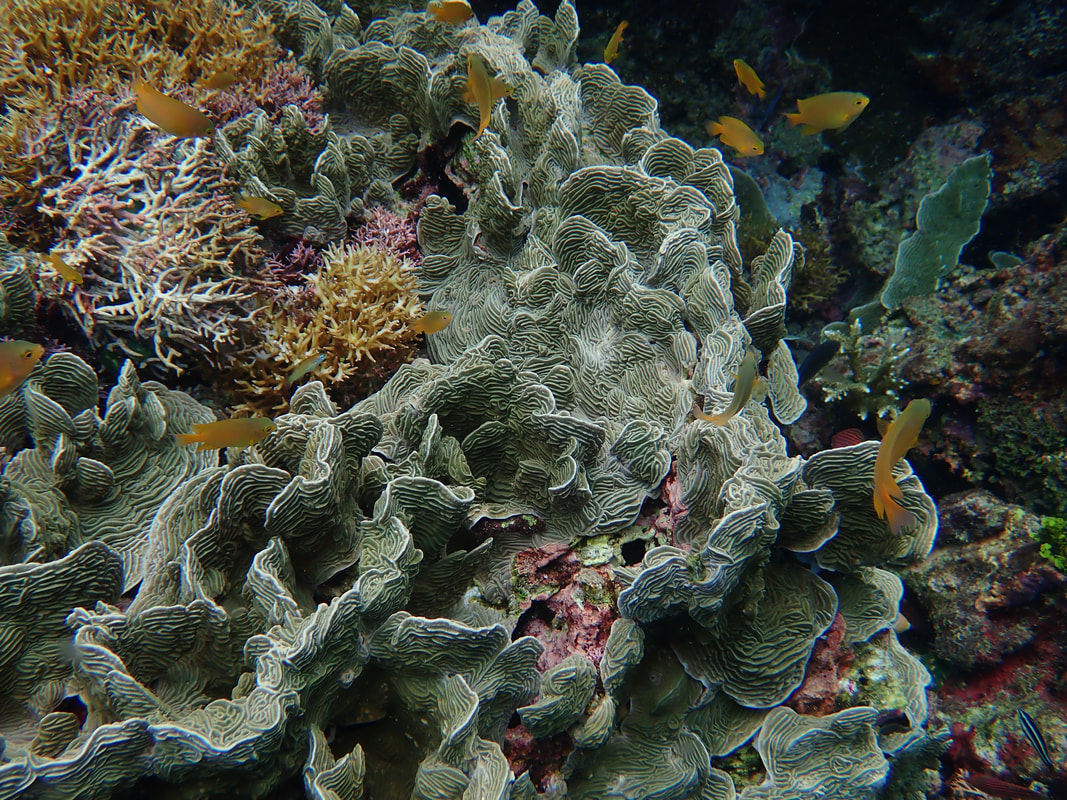
Healthy reef-building corals act symbiotically with single-celled algae called zooxanthellae living in their tissue. In this remarkable symbiotic relationship, the coral provides the algae with a home and nutrients for photosynthesis (in the form of ammonium from its own metabolic waste) and, in return, the algae provides the coral with food (to supplement the food it filters out of the seawater). It is these extra nutrients that enable the coral to build reefs by depositing calcium carbonate over a long period of time. The symbiotic relationship also adds color to the coral – and for us, beauty as well.
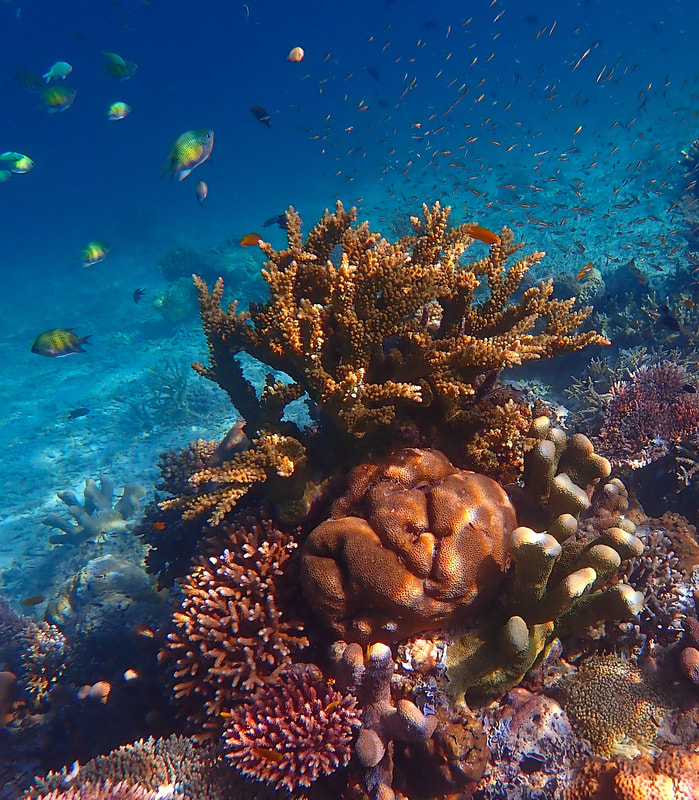
Here’s a thriving coral community. The problem in recent times has been climate change - warming the water and stressing the coral. The warm water also absorbs more CO2, making it more acidic, which interferes with the coral forming hard skeletons. Then there’s chemical pollution from agricultural runoff as well as plastic pollution. When reef-building corals get stressed, they expel the symbiotic algae, resulting in a loss of food and color – coral bleaching! The coral isn’t dead but it is not healthy, and reproduction slows dramatically. The coral community also suffers and the number of species in the ecosystem is significantly reduced.
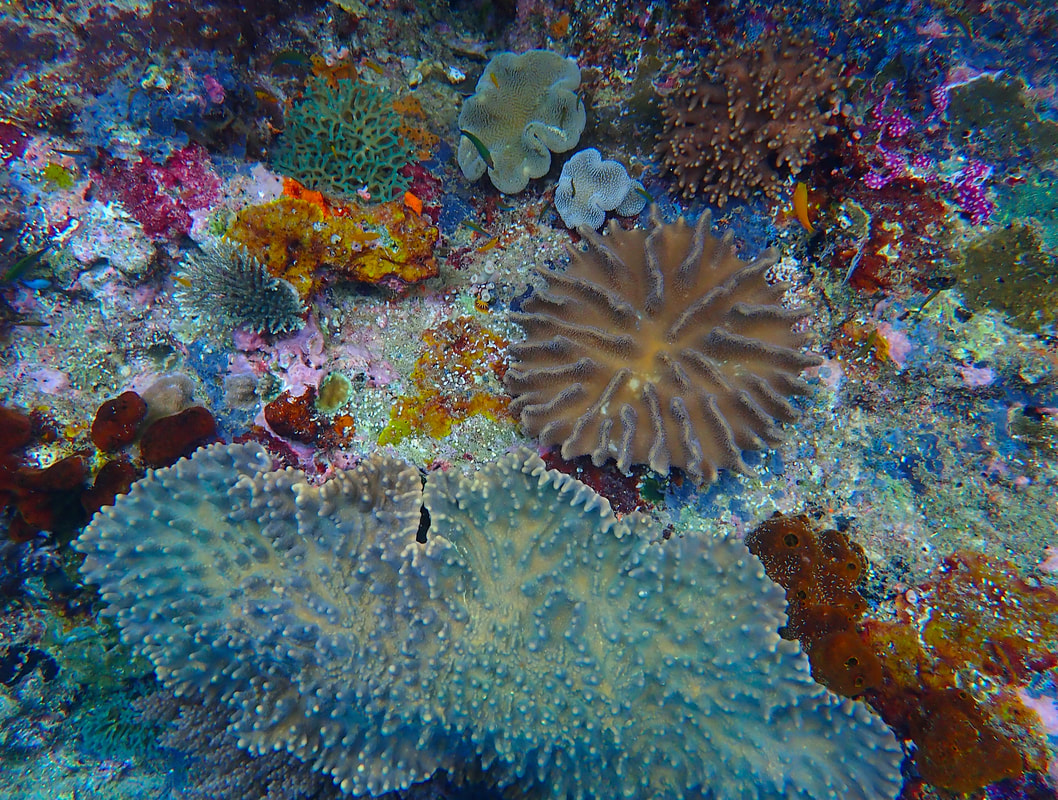
Thus far the Coral Triangle has fortunately avoided serious coral bleaching, at least for the time being. There are several theorized reasons why this area remains relatively healthy, as its topography, location, and geological history are unique and complex. It is certainly less exposed than other regions that have suffered coral bleaching, especially the Great Barrier Reef. The Triangle is not just a reef system; it is a complex area that includes volcanic regions as well as mangrove forests. The protection extends to the marine larval stages that most species go through, very important to the region’s health and extreme biodiversity. The Coral Triangle also has a stabile geological history, with the flora and fauna here evolving without the disruptions of ice ages and falling water levels/ drying seas. There are several other theories as conservation-related research in this special area is vital to the future of the Coral Triangle, which is beginning to be threatened, especially by destructive fishing. Fingers crossed
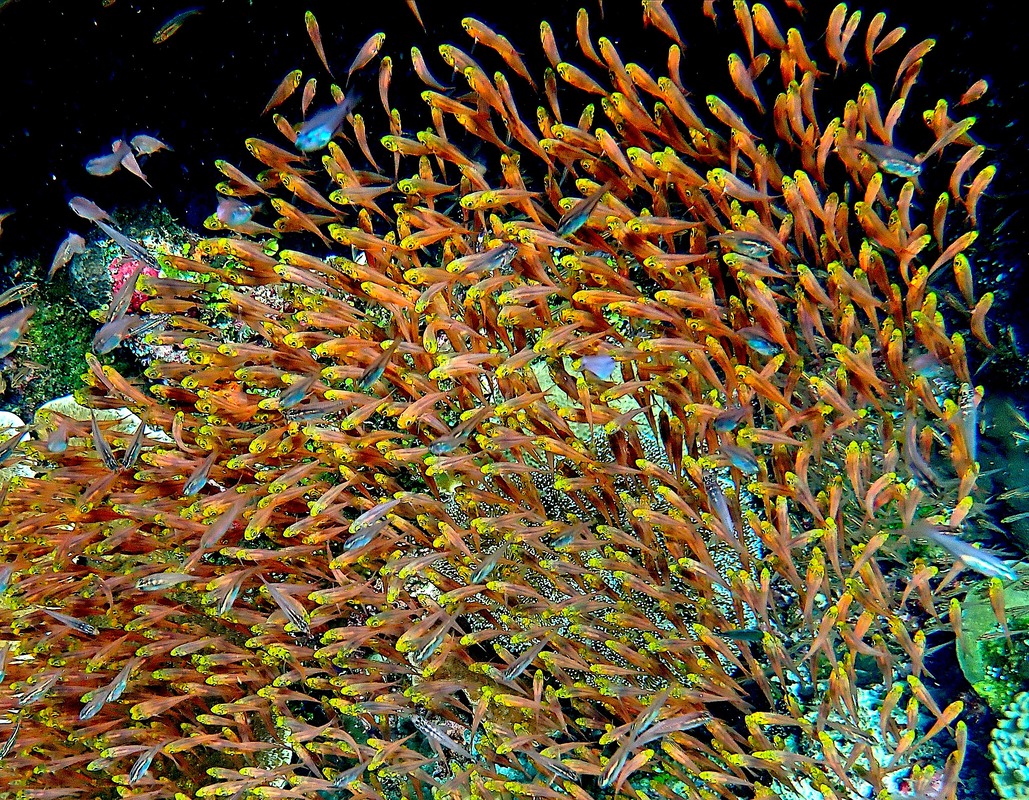
Known as the “Amazon of the Seas”, the Coral Triangle supports huge schools of reef fish,
giving us views like this most days snorkeling at Raja Ampat.
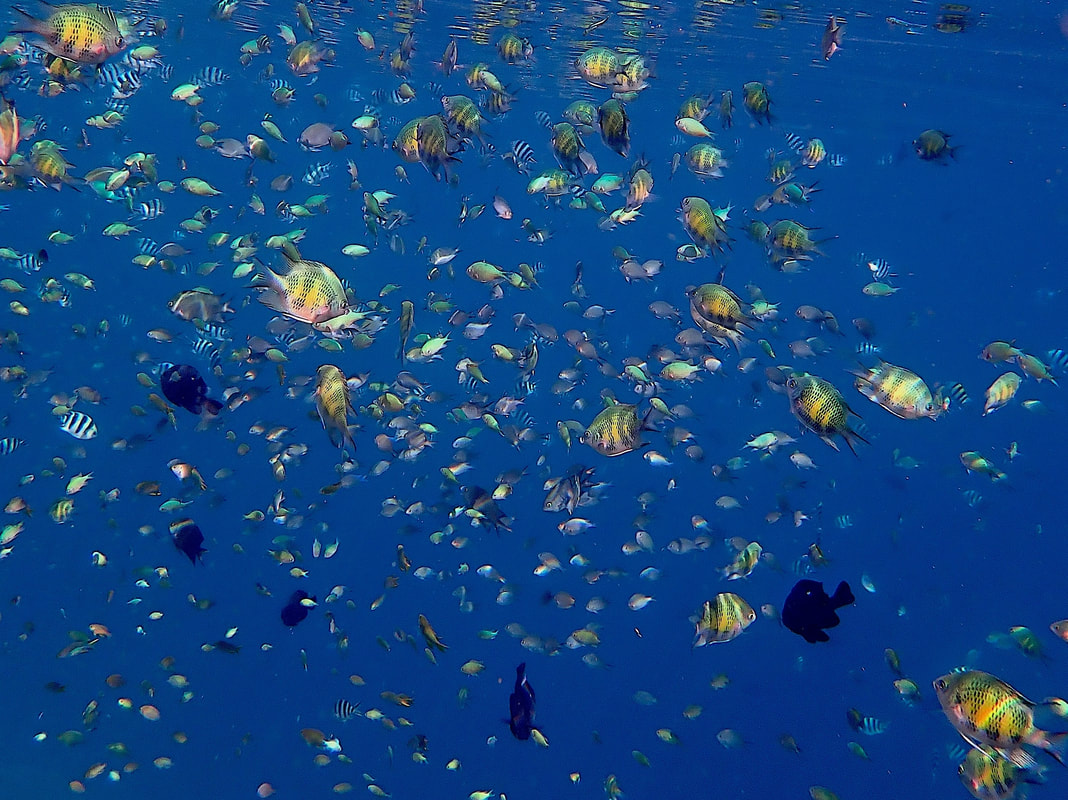
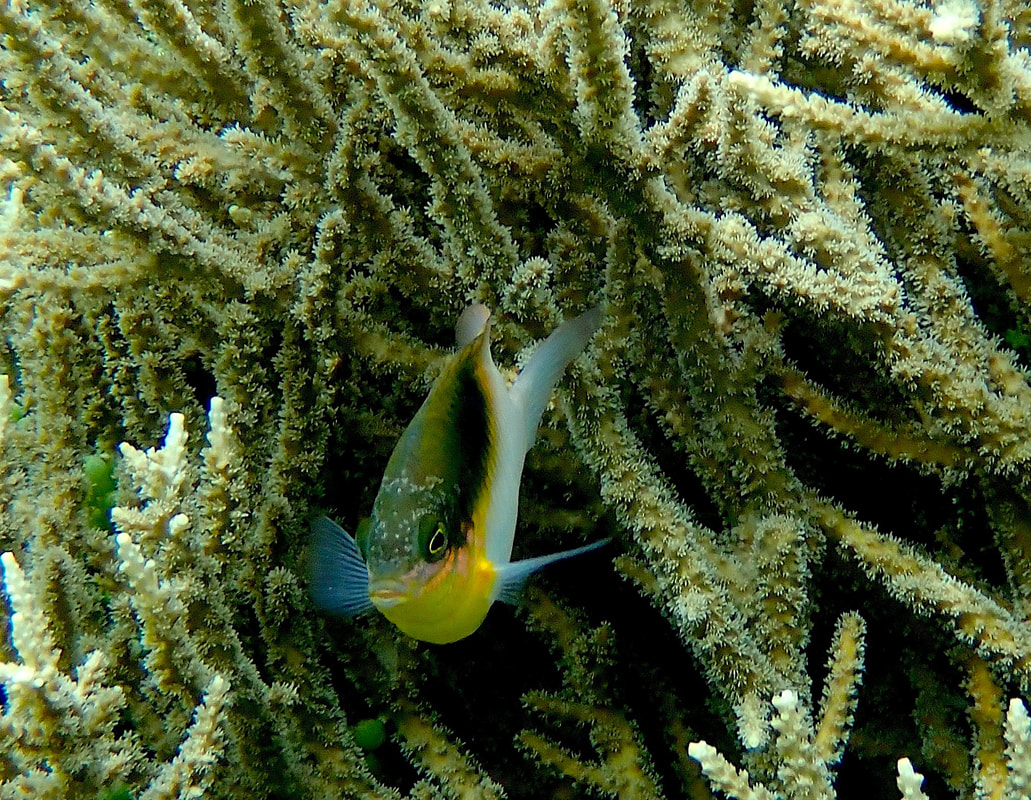
Even the soft corals offer protection for its inhabitants. This little guy couldn’t ask for a better
network of whiplike corals to hide in.
-----------------------------------------------------------------------------------------------------------------------------------------------------
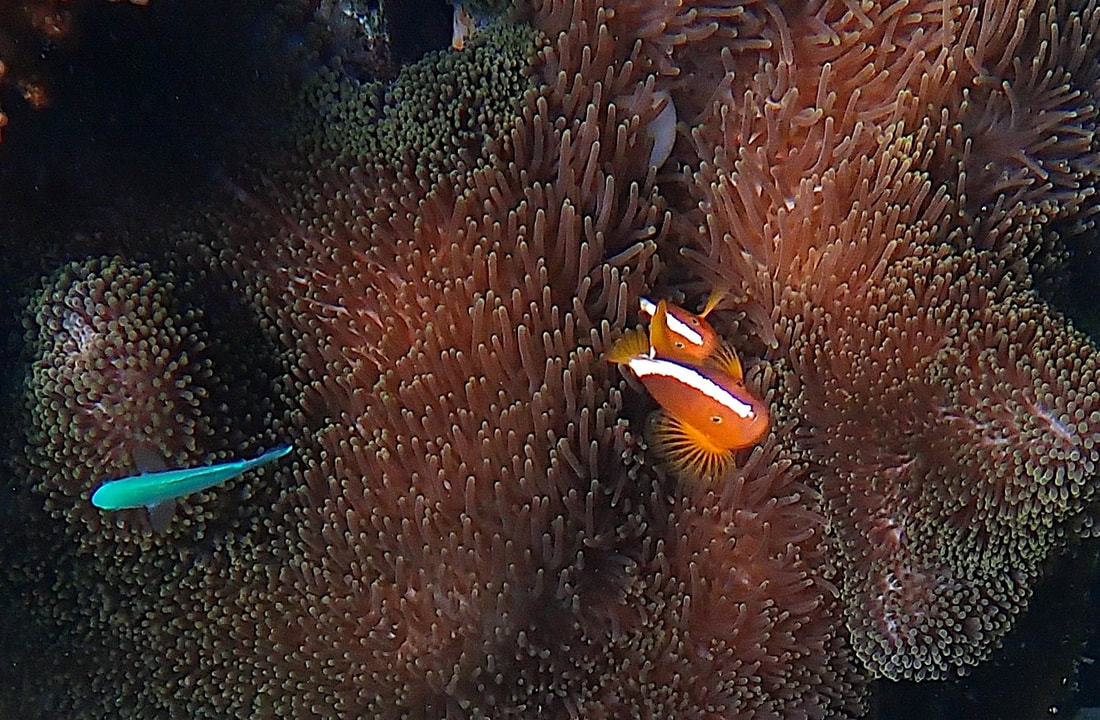
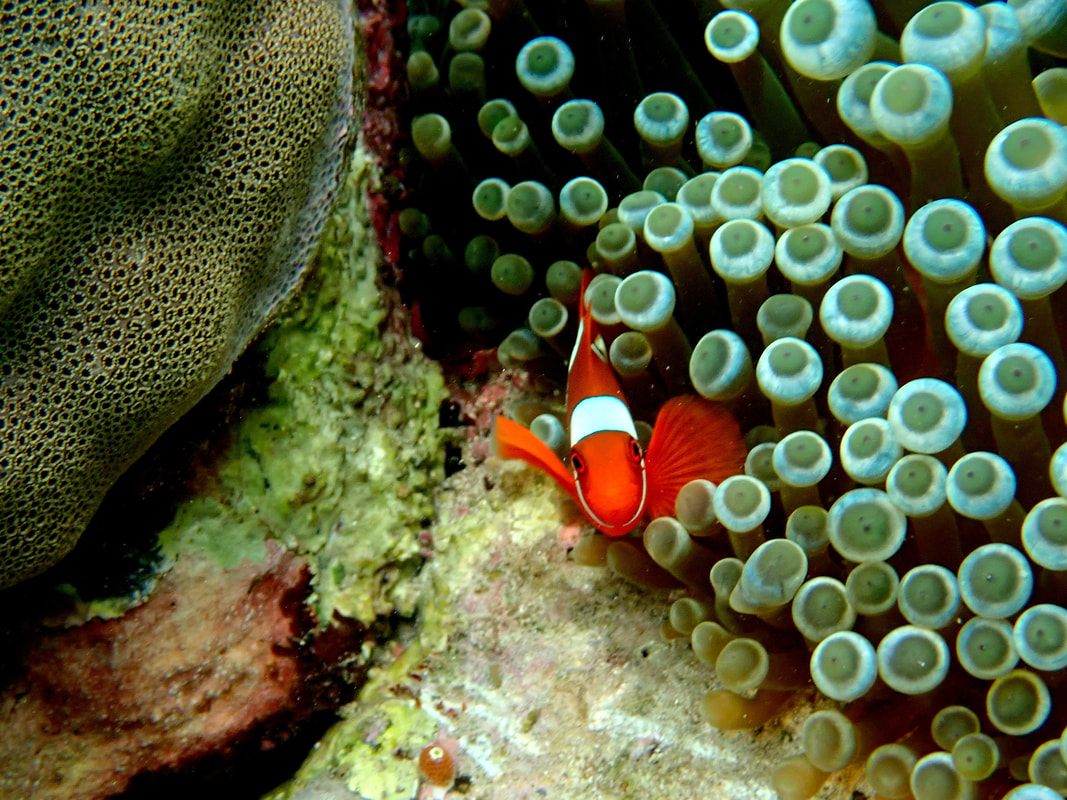
In addition to the corals, Sea Anemones also offer protection to several fish species, including our friend Nemo, a
Clown Anemone Fish (one of several related species). Due to their plantlike appearance, the Sea Anemone is
named after the terrestrial Anemone flowering plant; it is an invertebrate animal, a cousin of the corals, although
it is not a colonial animal. For self-protection and for feeding as well, it has toxic stinging cells, for which Nemo has evolved an immunity in its mucus covering (amongst other adaptations). There is a dynamic symbiotic relationship
that works in ways other than protection; Clownfish and Sea Anemones provide food to each other, including a
healthy exchange of waste products. Doesn’t seem to hurt their beauty; I never seem to stop taking Nemo shots!
Clown Anemone Fish (one of several related species). Due to their plantlike appearance, the Sea Anemone is
named after the terrestrial Anemone flowering plant; it is an invertebrate animal, a cousin of the corals, although
it is not a colonial animal. For self-protection and for feeding as well, it has toxic stinging cells, for which Nemo has evolved an immunity in its mucus covering (amongst other adaptations). There is a dynamic symbiotic relationship
that works in ways other than protection; Clownfish and Sea Anemones provide food to each other, including a
healthy exchange of waste products. Doesn’t seem to hurt their beauty; I never seem to stop taking Nemo shots!
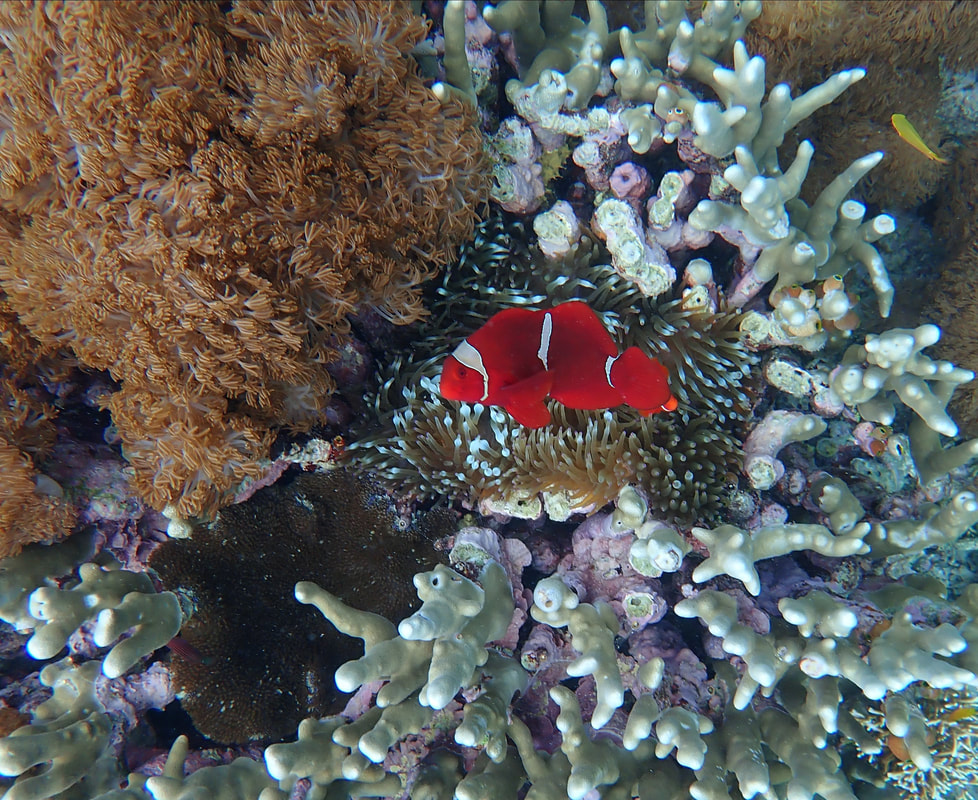
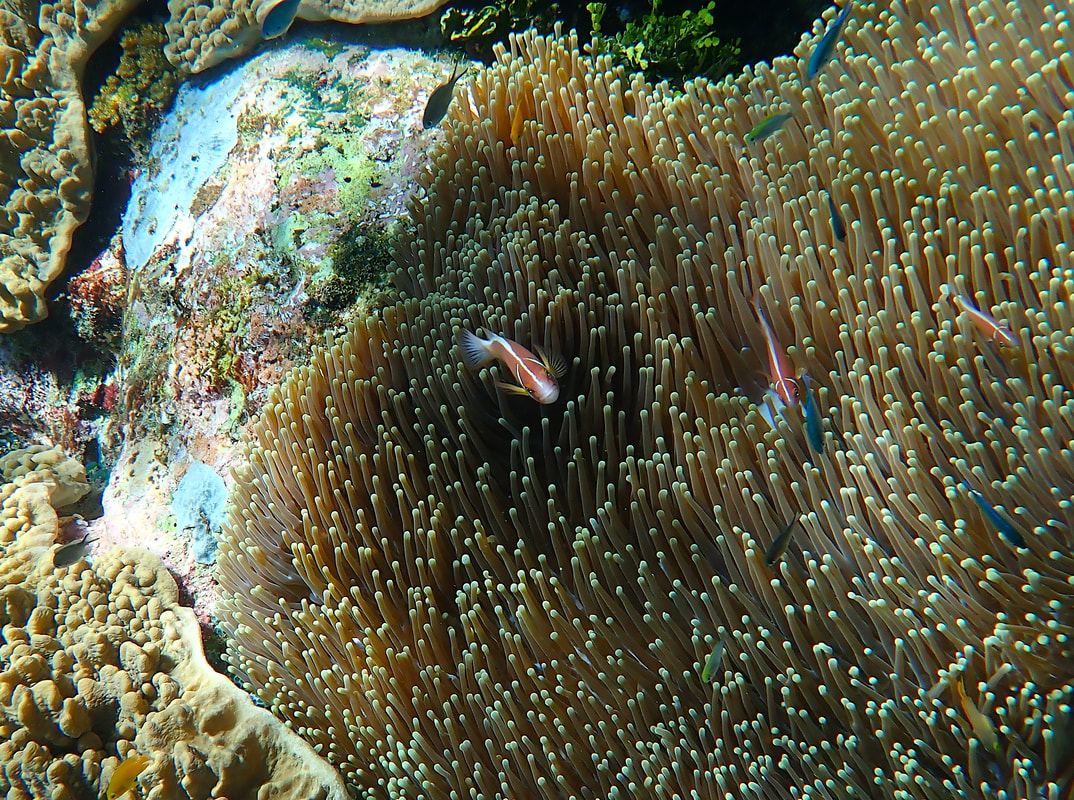
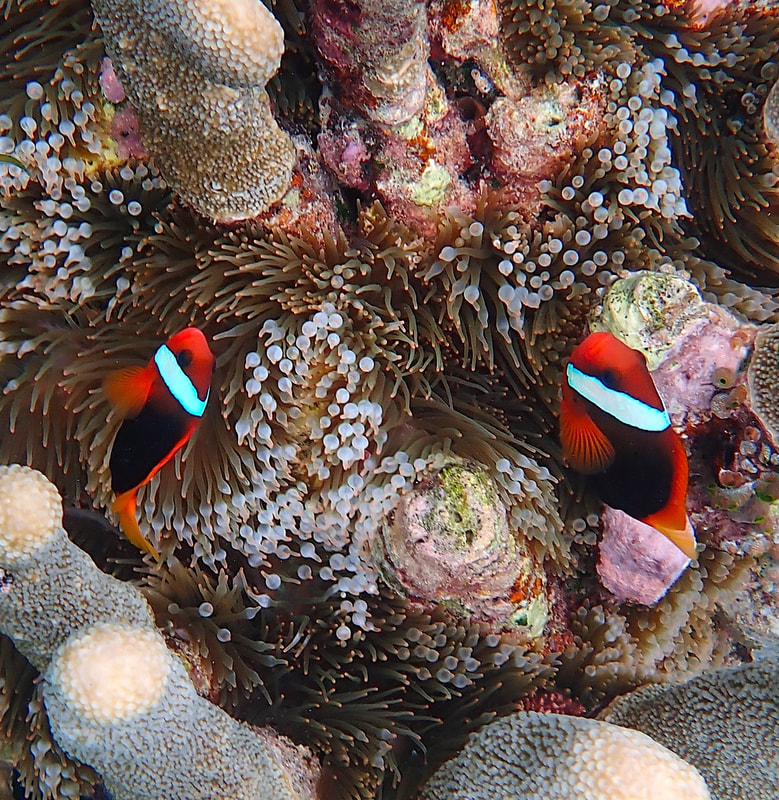
This centered one above and the matched pair below are Tomato Clown Fishes
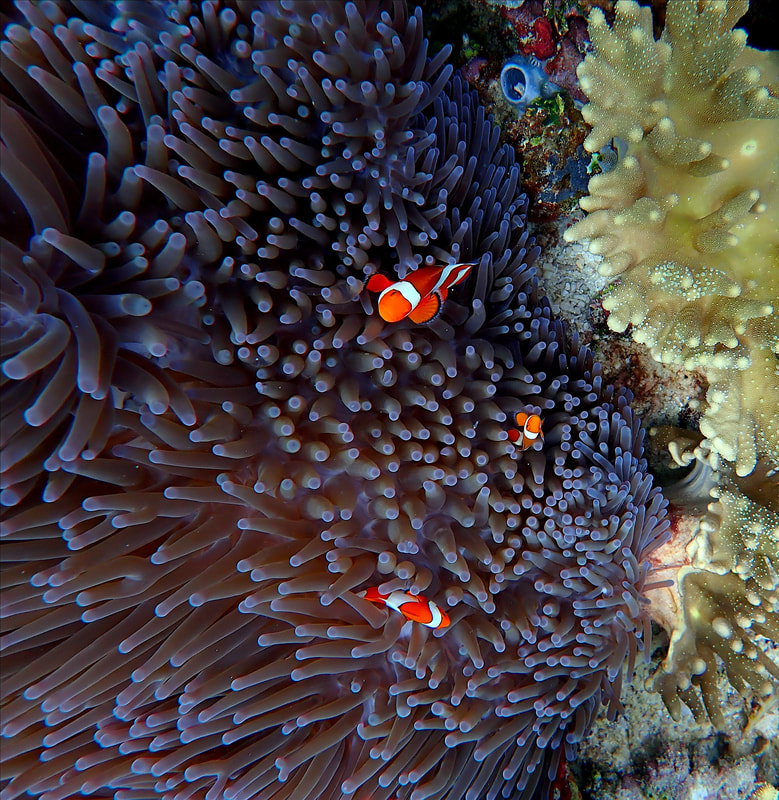
Vain as we are, sometimes we can imagine the fish is smiling.
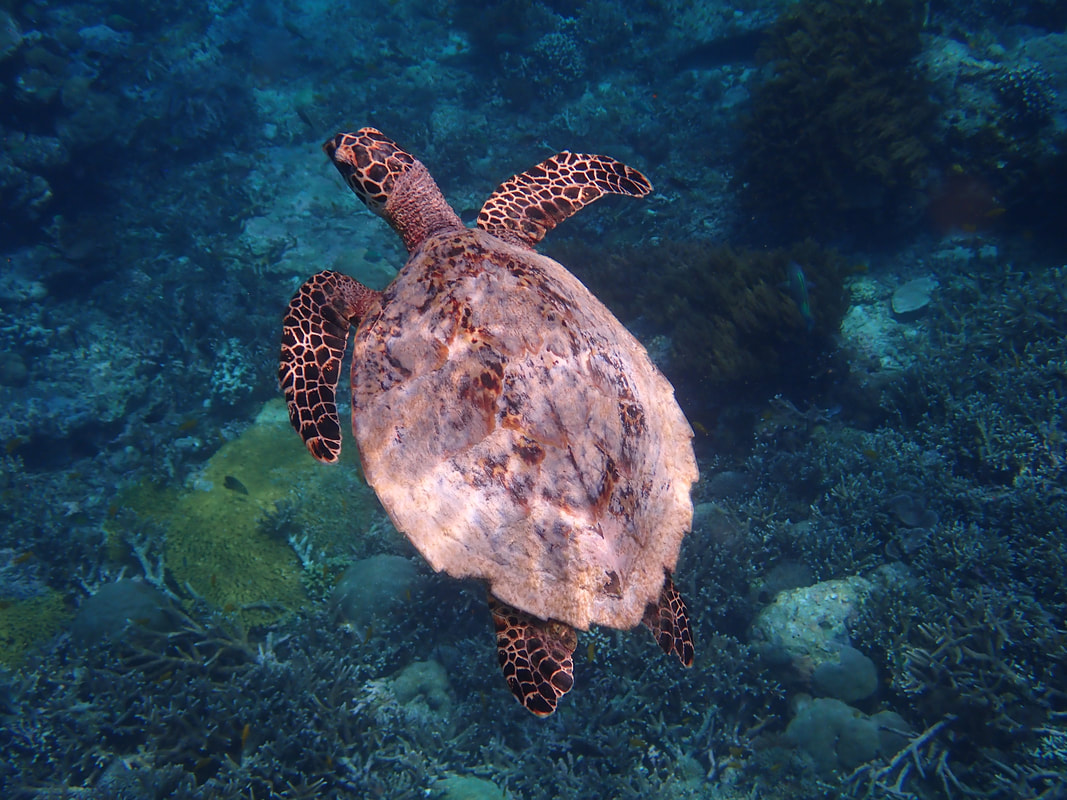
Of course, the Coral Triangle is also home to many
sea creatures we know and love
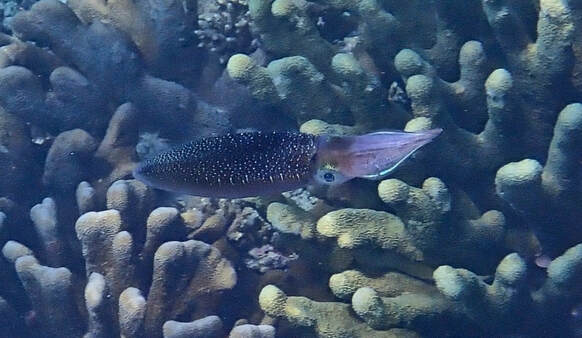
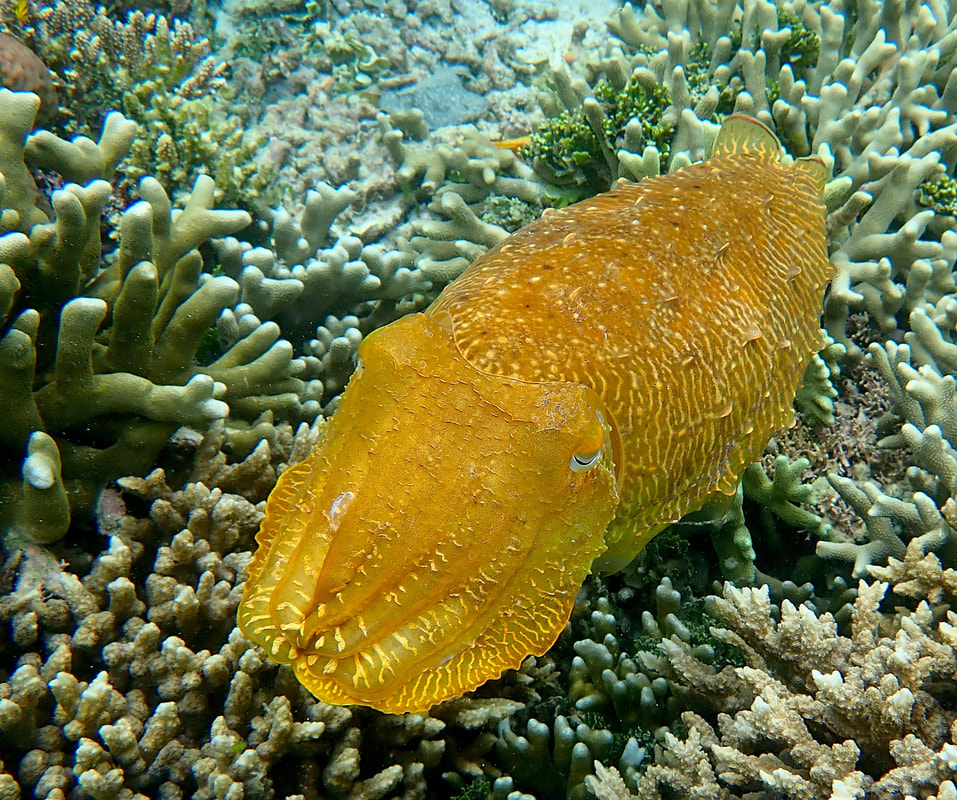
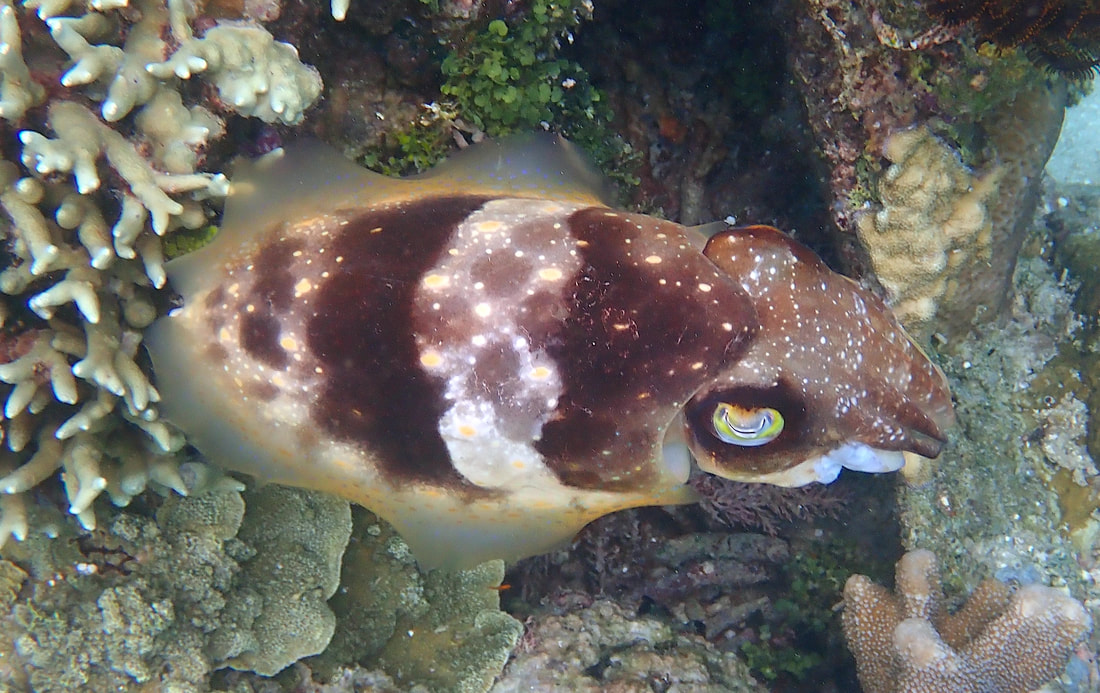
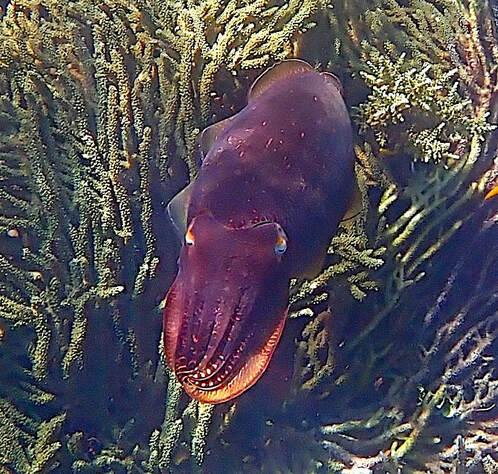
Cephalopods are a group of molluscs (shelled creatures) represented by the octopus, cuttlefish, chambered nautilus, and the squid (shown above). In Raja Ampat we had several great sightings of cuttlefish (below). They have an internal shell called a cuttlebone; it is filled with a gas mixture that the cuttlefish uses for buoyancy control. Being a shell, cuttlebone is rich in calcium carbonate and often fed to birds as a dietary supplement.
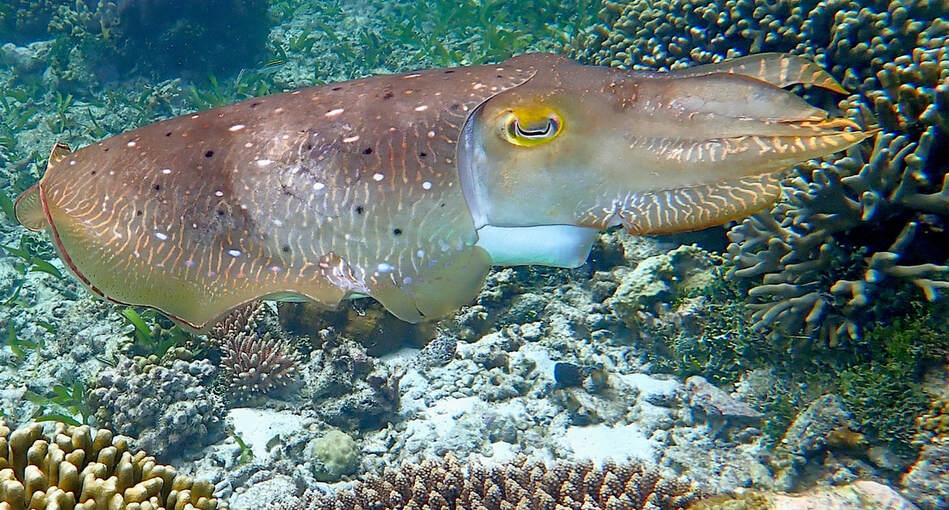
The cephalopods have sophisticated color-changing abilities to match
their background (using pigment cells
called chromatophores) as seen in these cuttlefish photos.
their background (using pigment cells
called chromatophores) as seen in these cuttlefish photos.
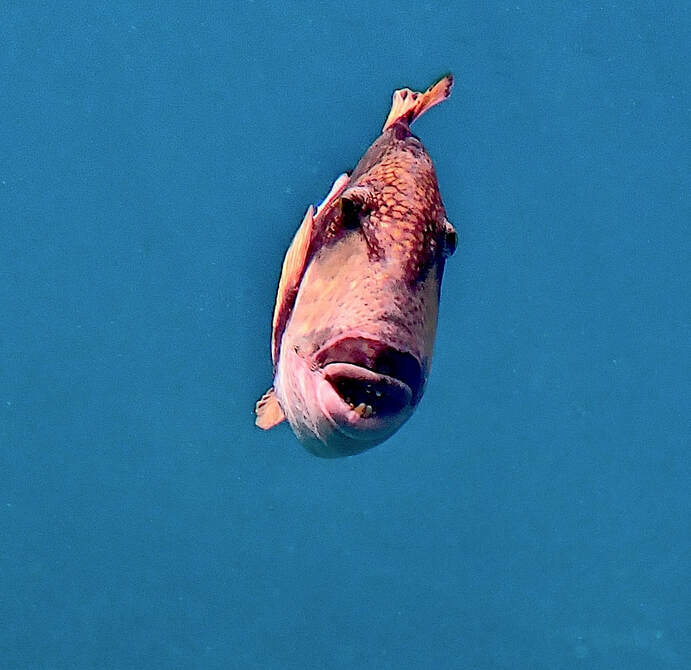
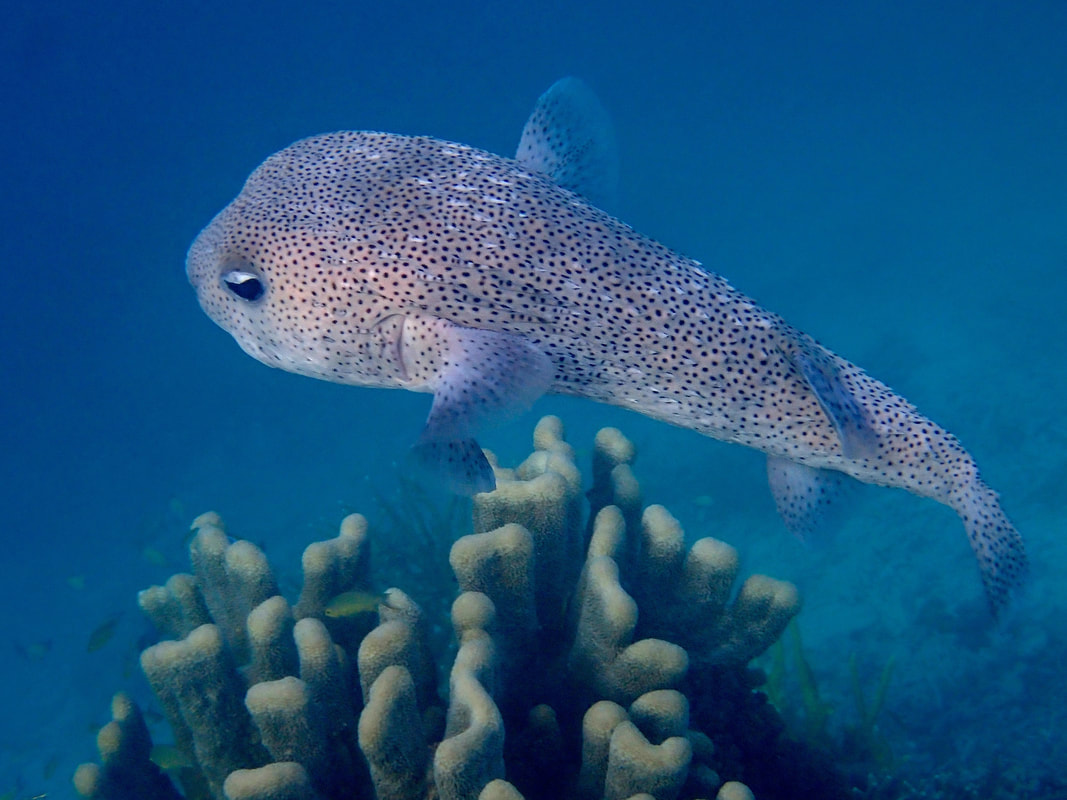
We were able to get good looks at a Titan Triggerfish (above)
and a Porcupine Puffer (below).
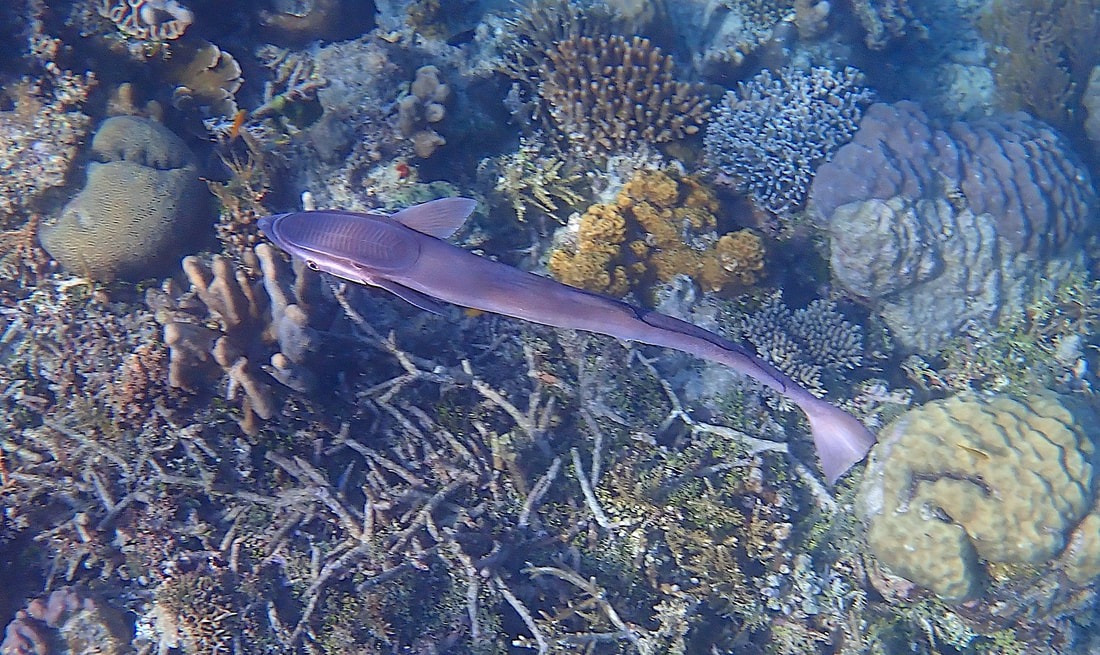
This is my first closeup with a remora (or suckerfish) which uses the oval area above its head to suck on
to a manta ray or a shark and get a ride while cleaning parasites off the skin of their “chauffeur”.
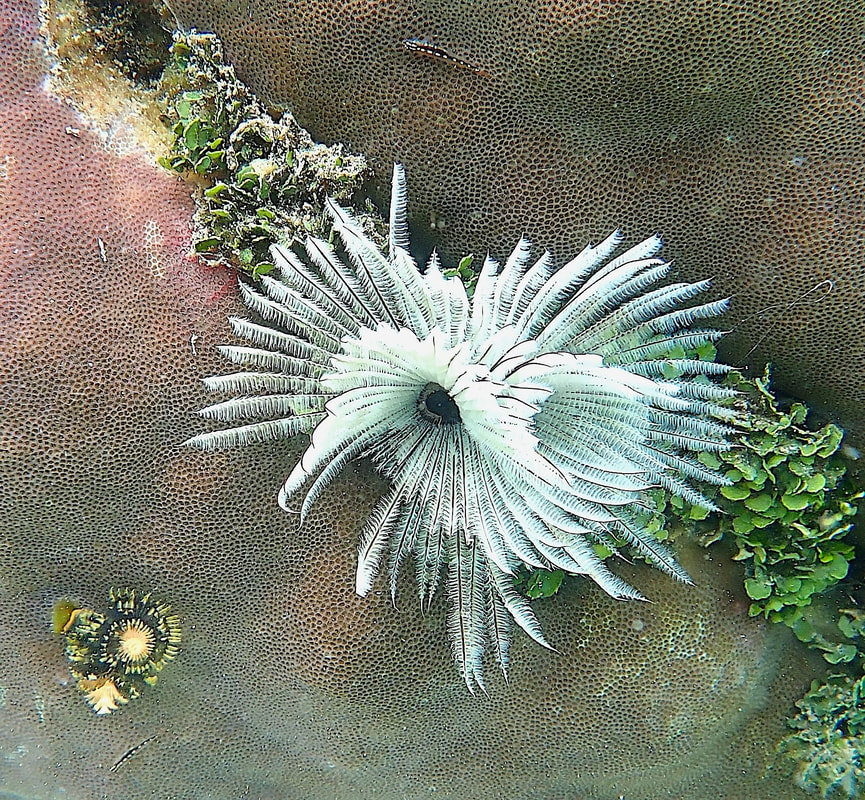
It sure looks like feathery plant. At first I thought it was a feather star, related to sea stars. But when
I looked it up, turns out it’s a marine feather duster (tube) worm, a filter feeding Annelid. Most
gorgeous worm I’ve ever seen.
I looked it up, turns out it’s a marine feather duster (tube) worm, a filter feeding Annelid. Most
gorgeous worm I’ve ever seen.
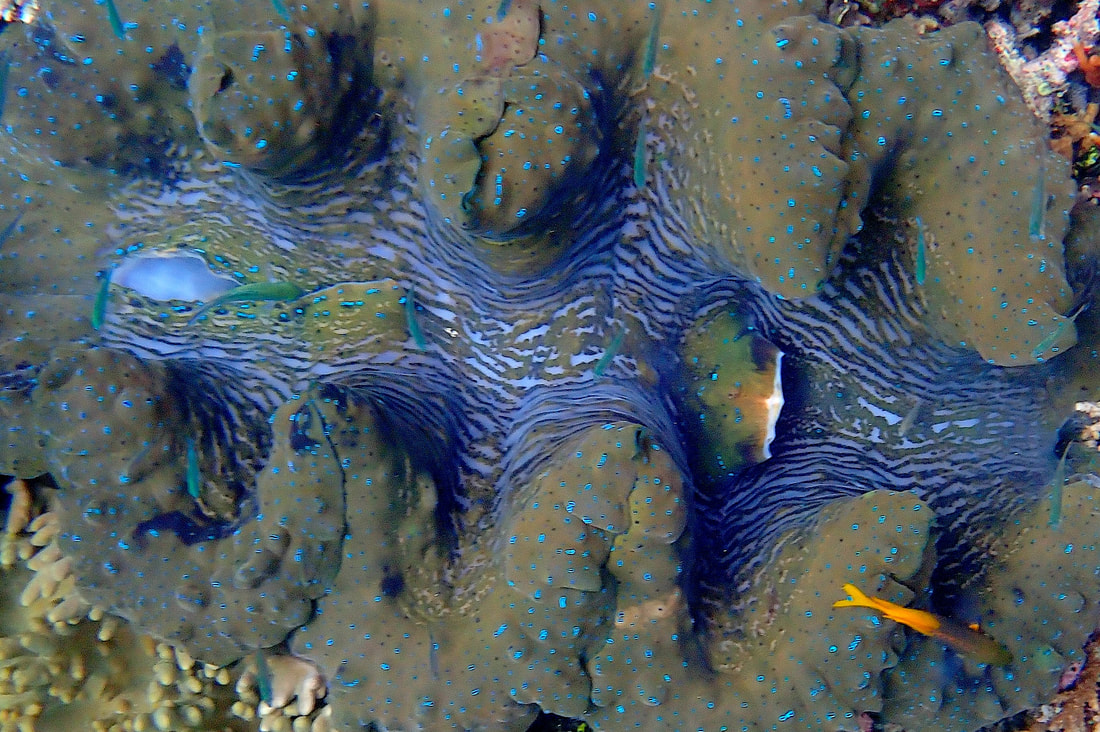
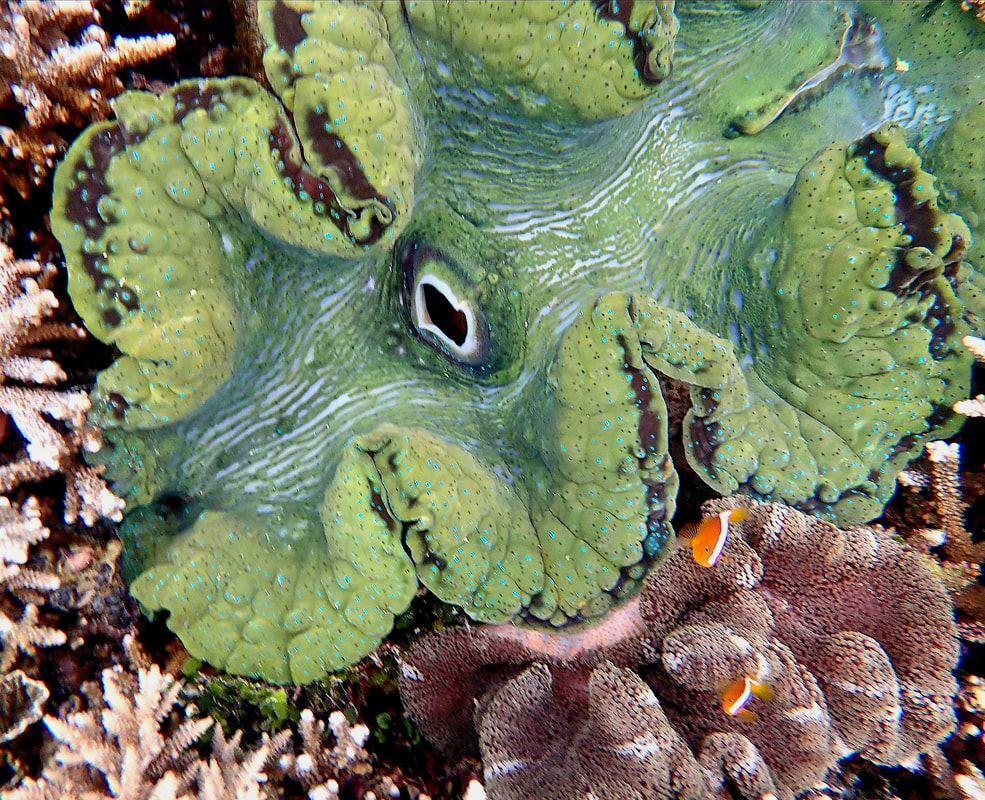
The giant clams are just beautiful in so many ways - their colors, shape and texture. Once again, as
with the corals, it is the symbiotic algae that produce these striking colors –
another sign of good health in the Coral Triangle.
with the corals, it is the symbiotic algae that produce these striking colors –
another sign of good health in the Coral Triangle.
In 2025, I returned to RAJA AMPAT - to the same resort (Eco Cove) followed by 10 days on a dedicated
snorkeling liveaboard cruise with just a few clients - 10. It was another wonderful trip, with the opportunity
to see and photograph many creatures. However, as I will point out later, the environmental conditions had declined from the previous year.
snorkeling liveaboard cruise with just a few clients - 10. It was another wonderful trip, with the opportunity
to see and photograph many creatures. However, as I will point out later, the environmental conditions had declined from the previous year.
For now, let's look at the bright side. Lots more of Nemo's kin - the many species of clownfish - almost always in the protection of the Sea Anemones, toxic to their would-be predators. The one below has luxury accommodations, choosing the Purple Magnificent Sea Anemone - which truly is magnificent.
The underwater world is beautiful and when healthy, quite colorful. This image looks like it's
a world of its own; it's called Bubble Algae (or Sailor's Eyeball) - one of the largest single-celled organisms.
.
a world of its own; it's called Bubble Algae (or Sailor's Eyeball) - one of the largest single-celled organisms.
.
Sponges are also quite colorful. As the corals, sponges are colonial creatures - multiple individuals living and working together. They are filter feeders, with pores and internal canals processing food - hence the name
of the Phylum, Porifera. The larger raised openings (like chimneys) seen here are oscula - the outgoing
excretory part of the plumbing system.
of the Phylum, Porifera. The larger raised openings (like chimneys) seen here are oscula - the outgoing
excretory part of the plumbing system.
"Nice starfish," you say. This critter is rightly called a sea star - in a Phylum called Echinodermata (spiny-skinned) along with many co-stars, including brittle stars, basket stars, cushion stars, feather stars, sea urchins, and sea cucumbers. Photos of cushion stars and sea cucumbers can be seen in the Snorkeling in French Polynesia Section.
This is one of my favorite images of the 2025 trip. It reminds me of a classical violinist. I call it the "Concert Master of the Oceans." It is another of those stars - a feather star (also called Crinoids). This species is a Climbing Feather Star, capable of motion with its feathery "arms" for trapping food particles, etc.
This one had me confused until I finally identified it as a rarely seen (in Indonesia) Velutin sea snail called Coriocella nigra. Looking somewhat like a sea slug, it has a small internal shell and a central siphon that is clearly seen (for water intake and sensory functions). The several raised projections on each side are called tubercles (or lobes); they are used to disguise its identity (basically camouflage). Quite proud of this one.
Not a great photo but it will do. This is another snail, which is a way of saying that it is classified as a Gastropod in the Phylum Mollusca (mollusks as we call them, including sea slugs, which lack a shell in their adult stage). There is a subcategory of sea slugs that have vibrant colors and exposed gills; they are called Nudibranchs - (translated - "naked gills"). There are over 3,000 Nudibranch species throughout the world's oceans, and their beautiful colors make them sought after treasures for photographers, whether scuba diving, snorkeling, or tide pooling.
The colors actually serve as a warning to other critters that they are quite toxic to the touch or taste - hence,
they are often described as being "fatally attractive". The toxins are amazingly acquired by the Nudibranch
from ingested prey - ingested (but not digested) and then stored on its skin as a mucous or in specialized
finger-like appendages called cerrata. Such is true in the above photo of a Nudibranch called Caloria India.
You can also see the sensory "horns" called rhinophores.
The colors actually serve as a warning to other critters that they are quite toxic to the touch or taste - hence,
they are often described as being "fatally attractive". The toxins are amazingly acquired by the Nudibranch
from ingested prey - ingested (but not digested) and then stored on its skin as a mucous or in specialized
finger-like appendages called cerrata. Such is true in the above photo of a Nudibranch called Caloria India.
You can also see the sensory "horns" called rhinophores.
In the Crested Nembrotha green-spotted Nudibranch shown above, you can see the feathery external
gills on its back. The black rhinophores are on the right.
This beautiful creature has the misfortune to be named "Varicose Wart Slug". Well, there are many of us that get along just fine despite our names. This guy (partially true, as Nudibranchs are actually hermaphroditic) has rows of raised projections on the back that are called tubercles. They are wart-like and some say resemble varicose veins - hence the name origin. The tubercles are partially for camouflage (giving it the appearance of a sea cucumber) and also in part to give off warning coloration, a characteristic of most Nudibranchs.
What in the world do we have here? Kind of looks like jellyfish, and they are gelatinous, but not even in the same Phylum as jellyfish. What we have is a string of Pelagic Tunicates called Salps. They are sometimes referred to quite informally by biologists as "our forefathers" as Salps are classified as Chordates. In their larval stage, they have a primitive backbone called a notochord. Fascinating! even more, there is a category of Salps called Larvaceans that maintain their notochord into adulthood. Talk about evolution. Pretty neat huh?
Time to move on to the fish world. We're looking here at a titan triggerfish. It's quite colorful, as most triggerfishes are (the plural is actually "triggerfishes" and not "triggerfish"). They also have a unique dorsal fin structure made up of 3 spines. The first (and largest) spine, which can be clearly seen above (behind the eyes and along the midline), can be raised and held in place (and used as a defensive mechanism) by a shorter second spine. When the fish feels it is no longer threatened, the second spine releases the tension, and the first spine is lowered back into a groove. The whole arrangement is trigger-like - hence the name triggerfish. One must be careful around them; when they are guarding eggs and see a snorkeler or diver, they can attack with the trigger raised. When they are in this mode, you can sense that they are watching you and can make sudden quick movements in your direction. You just move on without stopping. The one that you see here was feeding and a bit curious,
allowing me to get several photos - see below.
Named for the black patch on its back, the colorful saddle butterflyfish is quite graceful and maneuverable on the reefs, as you can visualize from this photo. Butterflyfishes have pointed snouts that enable them
to seize small prey, both plant and animal.
The longfin spadefish (or batfish as it is also called) is social by nature, often traveling in small groups. They tend to be curious and allow a close approach if one moves gently in the water. Often found in mangrove environments, longfin spadefishes have characteristic markings, as seen above; also their color can
change for several reasons, including signaling an invitation to cleaner fish to approach and remove
parasites off their large body (see below).
change for several reasons, including signaling an invitation to cleaner fish to approach and remove
parasites off their large body (see below).
In addition to its striking beauty, the coral environment offers food and protection to a diverse
fish community, including the eightband butterflyfish seen above.
The coral reef ecosystem offers protection to both predator and prey species. This tassled scorpionfish is a fierce predator, and though colorful, is difficult to spot once nestled into its ambush area. When consuming prey, the large, wide mouth expands and the prey is sucked in. It is also armed with several venomous spines, but they are used mostly in defense. The "tassled" name comes comes from the tassel-like fleshy appendages that adorn
its head and body (look at the lower lip), adding to its camouflage.
What we're seeing here is a stonefish, closely related to scorpionfishes (same Family,
different Genus). Stonefishes have more of a rock-like appearance, hence their
name. Their venom is also more potent than scorpionfishes
and used to kill its prey, rather than by biting it.
different Genus). Stonefishes have more of a rock-like appearance, hence their
name. Their venom is also more potent than scorpionfishes
and used to kill its prey, rather than by biting it.
Another group in the scorpionfish Family is the well-named flatheads, including
the notable crocodile flathead. The flatheads are ambush predators, mostly
nocturnal, lying in wait on the ocean floor.
the notable crocodile flathead. The flatheads are ambush predators, mostly
nocturnal, lying in wait on the ocean floor.
Probably the most bizarre member of the scorpionfish Family is the spiny walking devilfish. It actually prefers walking on the seafloor to swimming, using its modified pectoral fins as "legs". The spines are quite venomous, and when disturbed (as I've apparently done here, it warns of the danger it possesses by fanning out its beautifully colored pectoral and caudal fins. I kept my distance.
With all these predators around, survival is often related to special adaptations. This is true with the harlequin filefish (also known regionally as the long nose or orange-spotted filefish) that has a close relationship with
the branching Acropora coral it stays close to and sometimes hides in. It feeds off the polyps of the
Acropora and even assimilates its distinct smell, offering further protection. In regions of the world where
coral bleaching has taken place, the harlequin filefish population has significantly declined. Notice the dark
spot near the tail; it is often called a false eyespot, which can confuse predators about the direction
of movement. Even the real eyes are camouflaged. Finally, filefish owe their name to the coarse
texture of their scales, giving them a rough feel.
Another special defensive adaptation is the visual effect and synchronized behavior of schooling fish. Seen here are oxeye scads (named for their large, prominent eyes). They are members of the streamlined, fast-moving jack Family. Schooling fish are often silvery and/ or striped; these oxeye scads are both. With the fish staying in formation, the stripes break up the outline of an individual; the shiny, silver appearance gives off flashing reflections during motion of the school and is visually confusing to a would-be predator. It is the fish at
the edge(s) of the formation that are most vulnerable.
One of the harshest predators of schools like this
is the bluefin trevally (also known as the bluefin jack). Extremely fast, agile, and quick to respond, it has a variety of hunting techniques in its vast arsenal. Here, it would most likely make rushes at the school, trying to break up its synchrony, perhaps causing some dispersal, and picking off an individual out
of formation (and the protection it had).
is the bluefin trevally (also known as the bluefin jack). Extremely fast, agile, and quick to respond, it has a variety of hunting techniques in its vast arsenal. Here, it would most likely make rushes at the school, trying to break up its synchrony, perhaps causing some dispersal, and picking off an individual out
of formation (and the protection it had).
RAJA AMPAT is truly an amazing place. But problems are beginning to literally surface, and I feel it necessary to point them out. The amount of plastic in the water has gotten quite noticeable and is already causing the best water activity resorts to close many sites. Plastic pollution of the oceans is a global problem and a complex one. According to resort management, the government is not doing significant clean-up - this job is left to the resorts themselves, even though the affected sites are not part of their property. To make it worse, there are many locals who are naturally trying to make an income from the rise in ecotourism; - the problem is some of them are constructing hastily made little shacks and calling them "homestays" - inexpensive, basic lodging, appealing to the backpacker market. Without a real marketing plan and virtually no maintenance, they are abandoned after a few months and soon become part of the pollution. A significant number of these homesteads were seen in 2025 - many were already run-down.
With healthy coral reef ecosystems under threat in many parts of the world, sightings of red lionfish are seen as an indication that all is not well in the area; as beautiful as they are, it is not usually great to see them. Members of the Scorpionfish Family with very venomous spines, they are voracious predators and have fast breeding cycles; populations can easily get out of control. To make matters worse, they have unfortunately been introduced into the Western Atlantic where there are few species that naturally feed on them, allowing them to become invasive there (and the Caribbean) and be a serious problem. Various plans and efforts are underway in many locales to eradicate or at least control the red lionfish. They are, however, native to Indonesia and part of the ecosystem, but it is hoped that the population stays in balance. It's always the balance.
This one is definitely nasty. The crown-of-thorns seastar is a dangerous predator that feeds on coral polyps; it has caused widespread destruction to coral reef habitats, especially in the Great Barrier Reef. The numerous thorns are quite venomous, but they are for defensive purposes, and as you can see, they are quite formidable. Its feeding method is not for the squeamish; it actually extrudes its stomach out through the mouth (told you it was gross, although it's the way that all sea stars feed). But this guy feeds on coral; It then secretes digestive enzymes to liquify and absorb the coral tissue. It is said that an individual crown-of-thorns Seastar can consume over 60 sq ft of living coral reef per year. There are pre-conditions that lead to outbreaks. The first is agricultural runoff into the ocean that leads to plankton blooms, resulting in high survival rates of crown-of-thorns larvae. Climate change is another pre-condition (they can and do occur simultaneously), which leads to a weakened and fragile coral community. This nasty seastar takes advantage of both opportunities. NOTE: at the beginning of
this section (Raja Ampat), there's a reasonably-detailed discussion of climate change/ coral bleaching.
Marine biologists are trying different methods of dealing with coral predation by the crown-of-thorns seastar.
The most effective method thus far entails injecting the crown-of-thorns with sodium bisulfate, which is fatal
to the seastar but does not harm the surrounding reef/oceanic ecosystems. Not pretty, but more
or less successful to date.
this section (Raja Ampat), there's a reasonably-detailed discussion of climate change/ coral bleaching.
Marine biologists are trying different methods of dealing with coral predation by the crown-of-thorns seastar.
The most effective method thus far entails injecting the crown-of-thorns with sodium bisulfate, which is fatal
to the seastar but does not harm the surrounding reef/oceanic ecosystems. Not pretty, but more
or less successful to date.
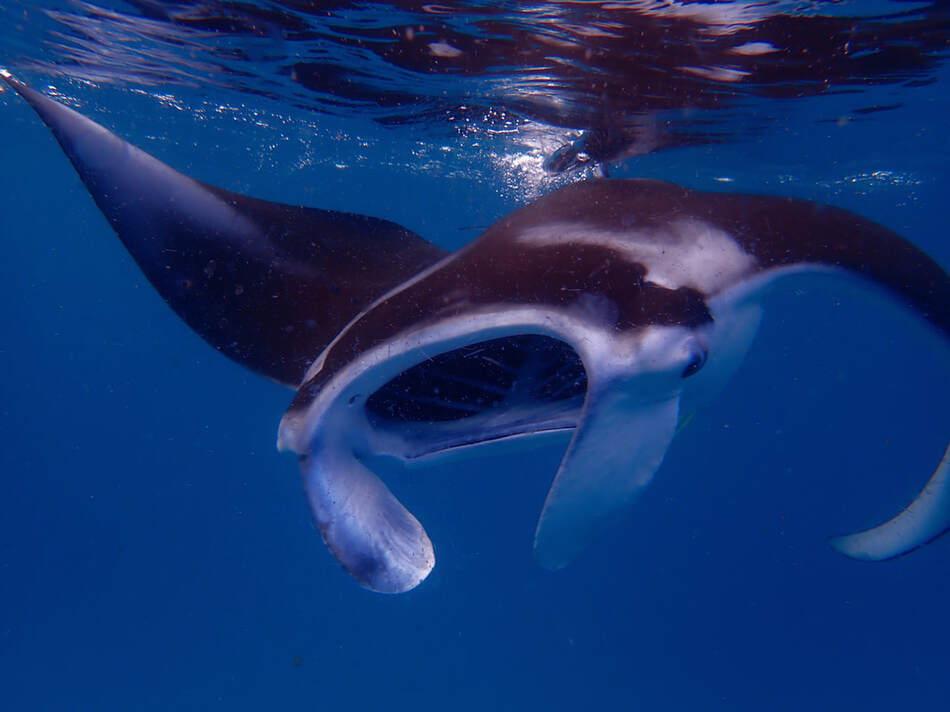
Let's go back to the positive and absolutely exciting. Swimming with manta rays is way up on that list.
Graceful and powerful swimmers using their huge fins (reaching 25 ft or more and weighing over 2 tons),
mantas can definitely approach if you are gentle in your movements. Manta rays are filter feeders, primarily consuming plankton and small crustaceans. When feeding, they swim with their mouths open, using
specialized cephalic fins (the 2 horns in front) to funnel water and prey into their mouths. Gill
rakers (comb-like cartilaginous plates with toothlike projections located on the gill slits (quite visible here)
filter out the food and the water is expelled. If you look real close, you can see tiny fish feeding inside
the mouth, trying to get a share of the filtered food.
Graceful and powerful swimmers using their huge fins (reaching 25 ft or more and weighing over 2 tons),
mantas can definitely approach if you are gentle in your movements. Manta rays are filter feeders, primarily consuming plankton and small crustaceans. When feeding, they swim with their mouths open, using
specialized cephalic fins (the 2 horns in front) to funnel water and prey into their mouths. Gill
rakers (comb-like cartilaginous plates with toothlike projections located on the gill slits (quite visible here)
filter out the food and the water is expelled. If you look real close, you can see tiny fish feeding inside
the mouth, trying to get a share of the filtered food.
This moment was awesome!
So was this one!! Not a common sighting. A super-venomous sea snake, the banded sea krait. This one
looks like its swimming through the universe. Although they contain a potent neurotoxin, they are mostly non-aggressive to humans. The only caution is to avoid swimming in very shallow coral reefs where they lurk about waiting for a fish dinner. While the small head is noticeable here, you can just barely make out the flattened tail which makes them a proficient swimmer. It has an interesting life cycle, spending most of its life in the water but coming ashore to lay its eggs. The banded sea krait is said to play an important role in the ecosystem, by controlling fish populations. Once again, it’s all about the balance.
Explore the oceans – time is precious!